Advice & Education
CYCLING, GROWING AS CITIZENS
A bicycle is not just a vehicle.
It’s a way of moving.
Of being in public space.
Of taking care of yourself and your city.
In this section you’ll find practical advice to help you ride better every day, along with educational content showing how cycling can become a tool for learning, participation, and change. Because a more bike-friendly city is a fairer city. And yes, a happier one too.

Small Choices,
Big Benefits
Cycling is simple. Doing it well makes the difference.
Here you’ll find useful guidance to move safely, consciously, and sustainably—whether you’re just starting out or you’re a regular cyclist.
Riding
Safely
Safety is not optional. It’s freedom.
- Always use lights and reflective devices, especially in the evening.
- Follow road signs and traffic rules: they apply to cyclists too.
- Wear a helmet, especially on long or busy routes.
- Maintain an appropriate speed and always signal turns with your arms.
- Anticipate others’ movements: looking ahead helps you ride better.
Riding safely means riding freely.
Lights: Why
They Are Essential
Lights are used to:
- make yourself visible
- see in the dark
- stay visible in rain, fog, or snow
Which ones to use
- White light at the front
- Red light at the back
Extra
Tips
- Wear clothing with reflective elements: they work even when your lights run out.
- In cities and well-lit areas, 80–200 lumens at the front are sufficient.
- On dark routes, choose at least 400 lumens.
See and be seen. Simple. Vital.
GETTING AROUND THE CITY BETTER
The city belongs to those who live it.
Even in the saddle.
- Choose the most suitable bike routes and plan your home–school or home–work journeys.
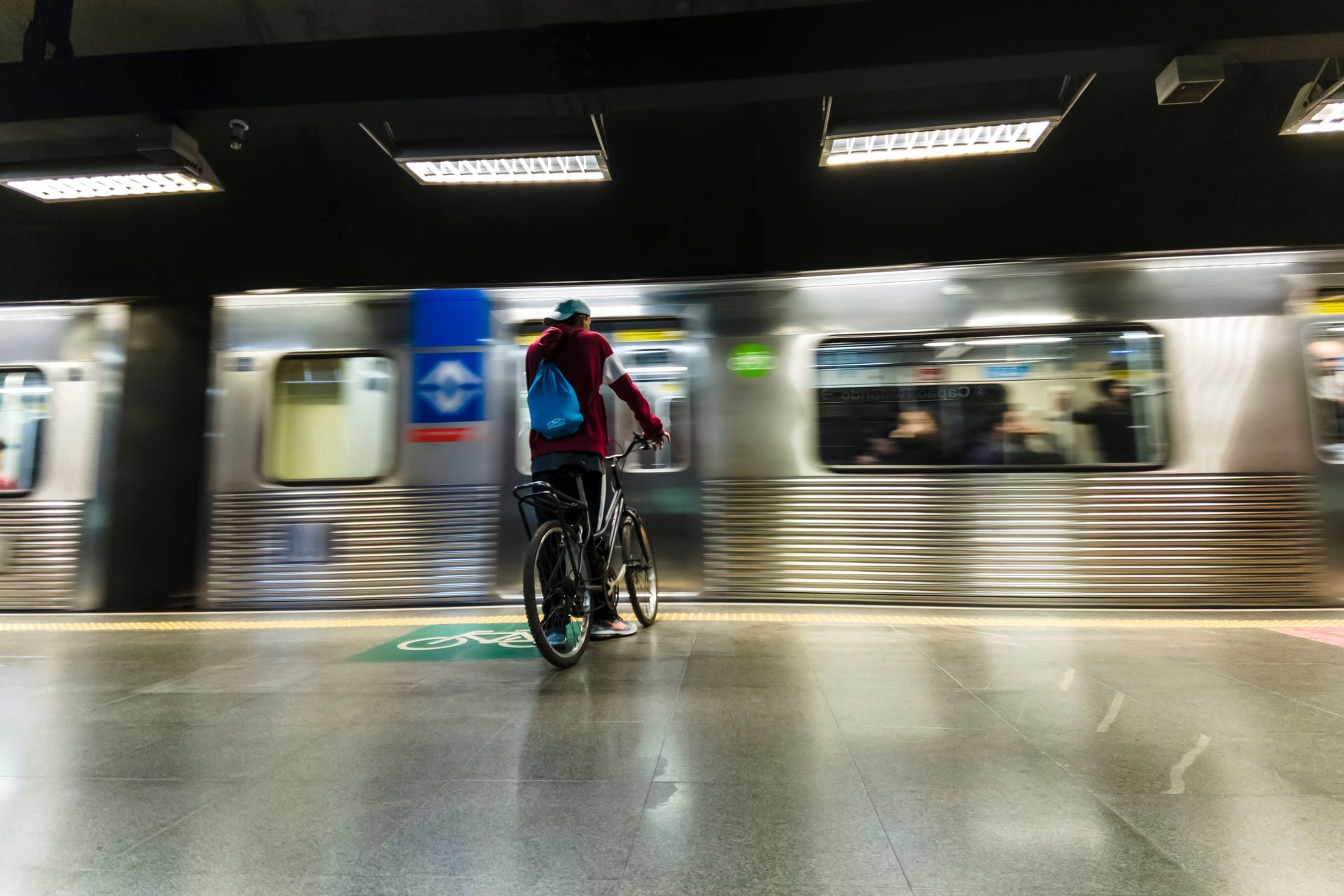
- Combine cycling with the metro and train: smart mobility is flexible.
- Share space with pedestrians and other road users, with care and respect.
- Enjoy the city in your free time—ride to a park, a museum, an aperitivo.
- Remember: cycling is not about competing. It’s about coexisting.
The city changes when everyday gestures change.
TAKING CARE OF YOUR BICYCLE
A well-maintained bicycle lasts longer.
And takes you further.
- Regularly check brakes, tires, and lights.
- Keep it clean: dirt and rust shorten the life of components.
- A bike in good condition is safer—and much more enjoyable to use.
Essential checks
To be done regularly
- Tires (pressure and wear)
- Cleaning of frame and drivetrain
- Checking bolts
- Gear adjustment
- Brake check
- Saddle and handlebar check
Just a few simple actions. A big difference.

WHY CYCLING IS GOOD FOR YOUR HEALTH
GOOD MOOD
Cycling increases serotonin and dopamine: the happiness hormones.
LESS STRESS
Even moderate activity reduces cortisol, the stress hormone.
HEART
It strengthens the cardiovascular system and improves endurance.
JOINTS
Cyclists are less likely to develop knee pain over time.
RIDING IN THE RAIN

Light Rain
Rain cape, preferably with reflective inserts.

Moderate Rain
Waterproof jacket, overtrousers, shoe covers.
Don't forget
Waterproof gloves, helmet cover if needed, waterproof panniers, saddle cover.