Tebaldo Brusato Square

Tebaldo Brusato SquarePiazza Tebaldo Brusato, 25121, Brescia (BS)
Just a stone’s throw from Via dei Musei and parallel to Piazzale Arnaldo (Arnaldo Square), Tebaldo Brusato Square is one of those spaces that Brescia quietly keeps to itself, but which tells a powerful story.
THE SQUARE
It’s named after Tebaldo Brusato, a nobleman and Guelph from Brescia who opposed the Holy Roman Emperor, Henry VII, during the siege of 1311.
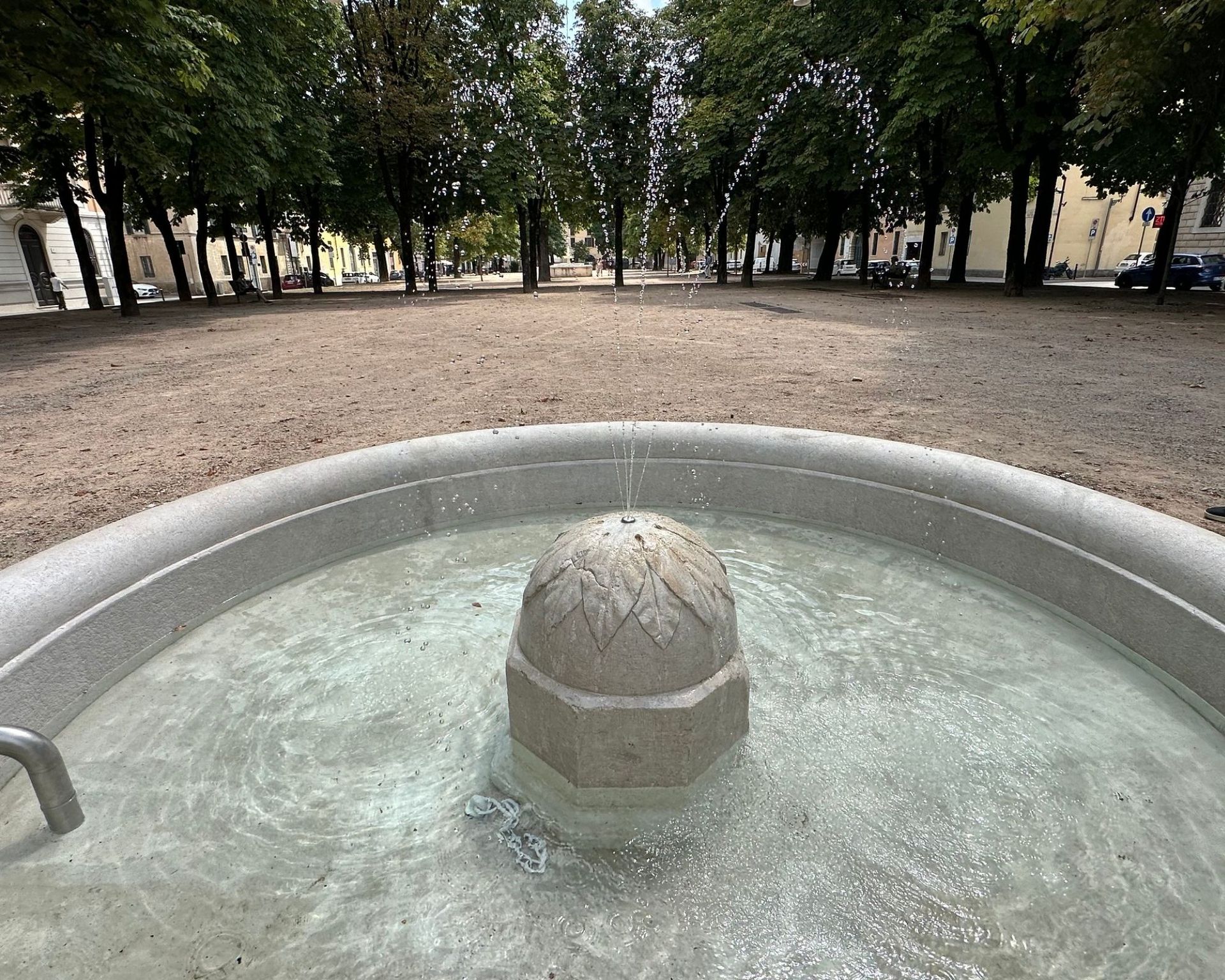
Today it’s a simple a tree-lined rectangle with a central public garden. But beneath its apparent tranquillity, it conceals eight centuries of transformation.
It was in the year 1173 that this space, then adjacent to the monastery of Santa Giulia, was officially designated as a town square. Previously an agricultural area, it became a centre of trade, with markets and workshops that attracted inhabitants, merchants and tradesmen. It was here that the city's first real municipal urban fabric was created: a square that shaped the historical centre as we know it today.
As the centuries passed, the square changed in appearance and use: commerce gave way to aristocratic living.
Influential families decided to build their residences here, a stone's throw from the Roman Forum.
Among the most important buildings are: Palazzo Cigola, Palazzo Luzzago and Palazzo Suardi.
On the south-eastern side there’s also an important archaeological site, the Roman domus in Via Alberto Mario, discovered in the 1980s by the archaeologist Gian Pietro Brogiolo. Today it isn’t accessible to the public, but it remains a valuable testimony to Brescia’s Roman past, whose layers lie beneath the city’s modern-day pavements.
Piazza Tebaldo Brusato is a place that has seen merchants, nobles, citizens and defenders pass through. A corner of Brescia whose silence speaks volumes.
Ph Francesca Montiglio