The Lodoìga

The LodoìgaPiazza della Loggia, Brescia (BS)
It’s pronounced /lodoˈiɡa/, derived from “Ludovica”, and in Brescia everyone knows it as La Lodoiga. It may be a mute statue, but it had the square talking for centuries. Created in the second half of the 16th century, perhaps by Giovanni Battista Bonometti, or by Cesare Federico da Bagno, it’s one of the most intriguing and iconic figures in Brescia’s historical centre.
The statue
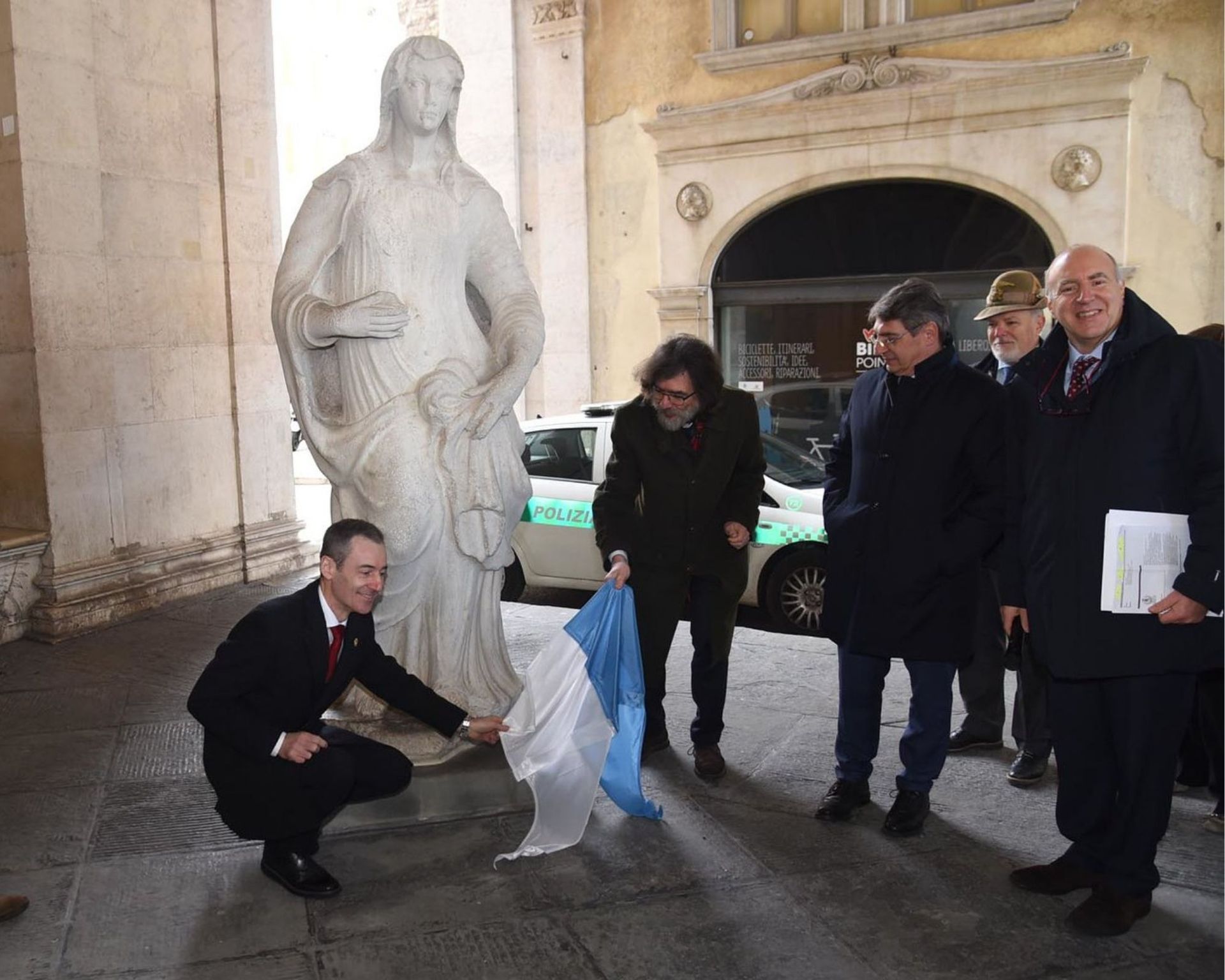
It used to be located on the facade of the Palazzo della Loggia, right next to the last pillar on the left. It remained there until the end of the 19th century, when it was removed and then relocated several times. After its long wanderings, in November 2011 the Lodoiga returned to the portico of the Loggia, where you can still see it today.
2.30 metres tall, sculpted in Botticino marble, the Lodoiga depicts a female figure dressed in a light tunic with a cloak covering her shoulders and arms. A veil partly covers her forehead. Her left hand holds the cloak, while the right hand once held a chalice with a host, a clear symbol of faith.
The proportions are deliberately deformed: the statue was made to be seen from below, like all sculptures designed to be positioned high above the ground.
But Lodoiga isn’t only art. It embodies popular politics.
It belongs to the group of so-called “talking statues”: works used by citizens to post anonymous messages of protest or criticism of the city rulers. It was the spokesperson of the people, a stone figure that symbolically countered the city authorities, represented by the “màcc dèle ùre” (the “madmen of the hours”) of the Clock Tower.
Ph Christian Penocchio