Duomo Vecchio (Old cathedral)
Duomo Vecchio (Old cathedral)Piazza Paolo VI, 25121, Brescia (BS)www.diocesi.brescia.it
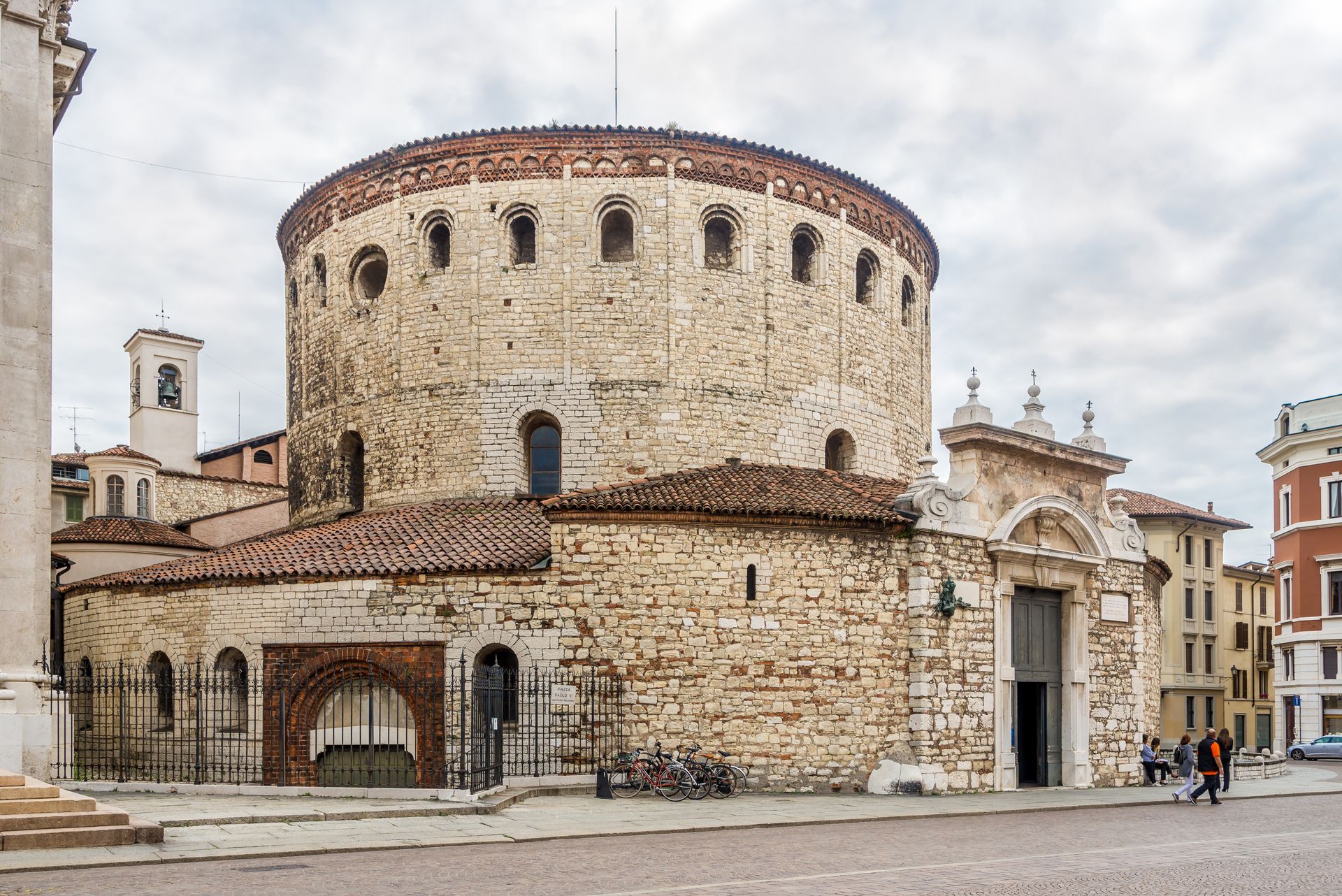
In Brescia, locals call it La Rotonda, but its official name is the Winter Co-Cathedral of Santa Maria Assunta. It’s one of the oldest and most recognisable places of worship in the city.
Its construction began in the 11th century, on top of the remains of an older basilica. While its appearance has changed several times over the years, it has always retained its original spirit: Romanesque, solid and austere. And it’s precisely this essential, unadorned form that makes it a shining example of Lombard Romanesque architecture.
In Brescia, beauty isn’t flaunted: it’s recognised. As it has been for centuries.
THE EXTERIOR
The Rotonda is immediately recognisable: a cylindrical Romanesque structure, built with medolo stone and Botticino marble, marked by single lancet windows on three levels and round oculi at the top. The regular pilaster strips and the sawtooth terracotta frieze speak the sober, assured language of the architecture of the time.
The current entrance, opened in 1571, took the place of the original one, still visible inside. Above it stood the Romanesque bell tower, which collapsed in 1708: today, only a few depictions of it remain.
On the right, an excavation reveals an ancient medieval arch, which was part of the original entrance. At the back, between abutting buildings, you can admire the 16th-century chapels, domes with lanterns and the 18th-century bell tower.
In the 19th century, architect Luigi Arcioni revealed the building’s Romanesque spirit once again, eliminating more recent interventions. The result? A monument that speaks clearly, without gilding the lily.
THE INTERIOR
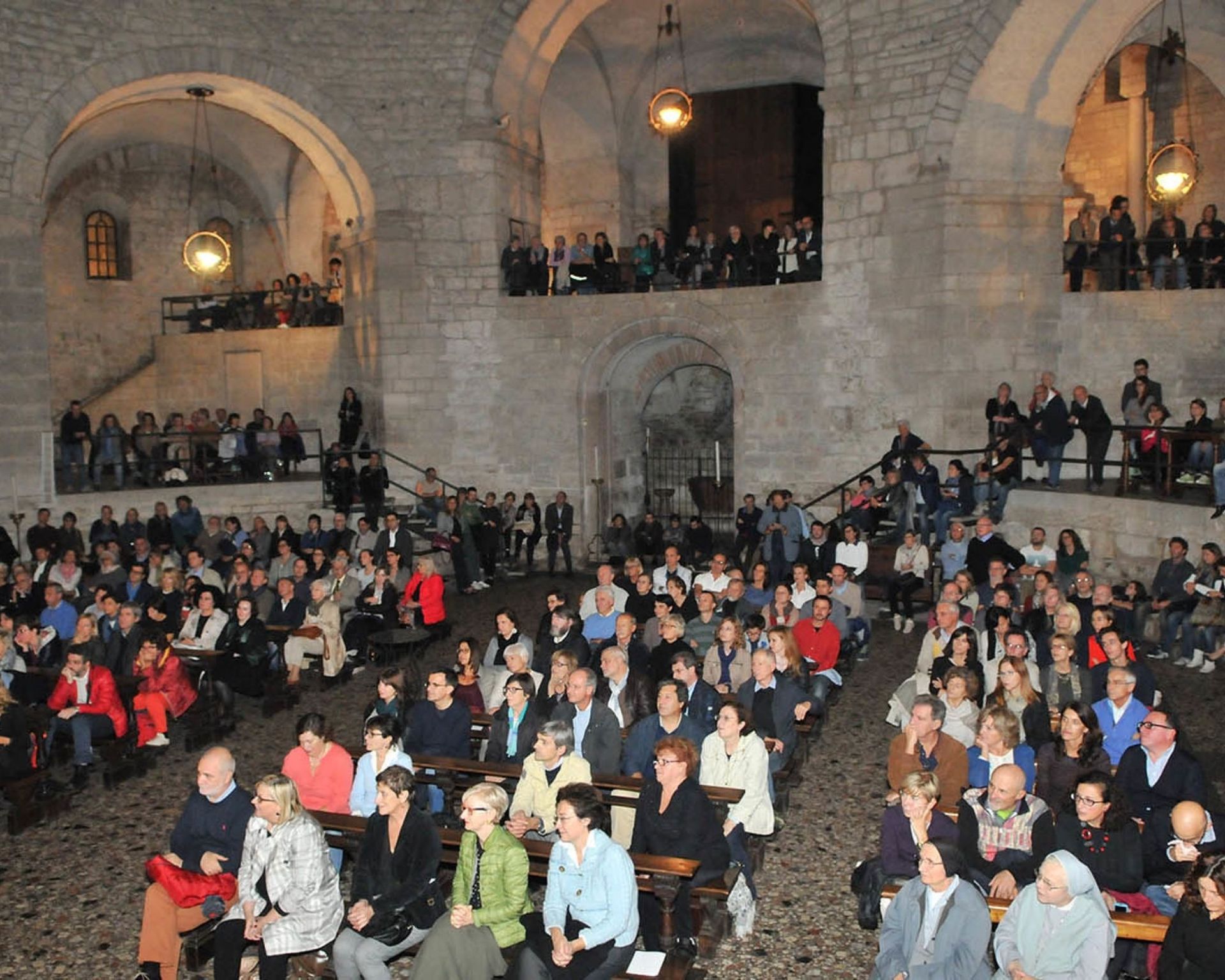
The interior of the Rotunda retains all the strength of the Romanesque architecture, made even more legible by Luigi Arcioni's 19th-century restorations, which revealed the original structure once again by eliminating later additions.
The current entrance, opened in 1571 by Giovanni Maria Piantavigna, offers a direct view of the stalls, the ambulatories and the 15th-century presbytery. At that time, the floor was raised and two side staircases were built, leading down to the original floor.
On either side of the portal, you can still see the stairs that once led to the bell tower that collapsed in 1708, which were also recovered in the 19th century.
The church is spread over several levels: from the entrance you descend into the circular ambulatory, separated from the stalls by eight pillars and round arches that support the dome.
The ambulatory leads to the presbytery, from where you can descend to the crypt of St Philastrius or climb up to the transept. More steps lead to the choir and then to the apse.
A complex structure, yes, but readable. Because in Brescia, even architecture speaks clearly.

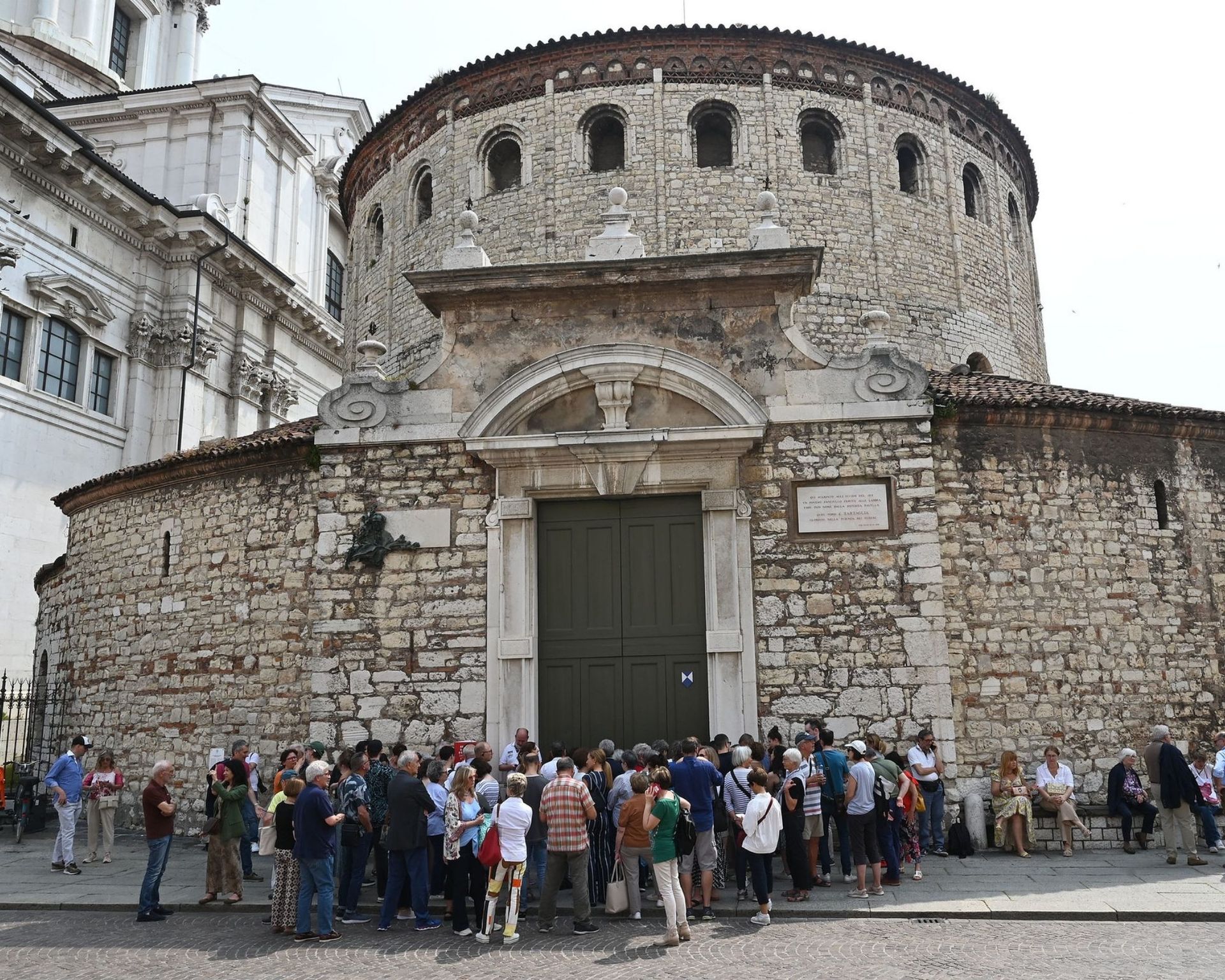
Ph Christian Penocchio
Ph Christian Penocchio