Church of Santa Maria del Carmine
Church of Santa Maria del CarmineContrada del Carmine, 25122, Brescia (BS)www.sanfaustinobrescia.org/chiesa-santa-maria-del-carmine/
In the heart of the Carmine district, west of Via San Faustino, is one of the city's most representative churches. Santa Maria del Carmine has survived the centuries, embracing transformation without never losing its strength.
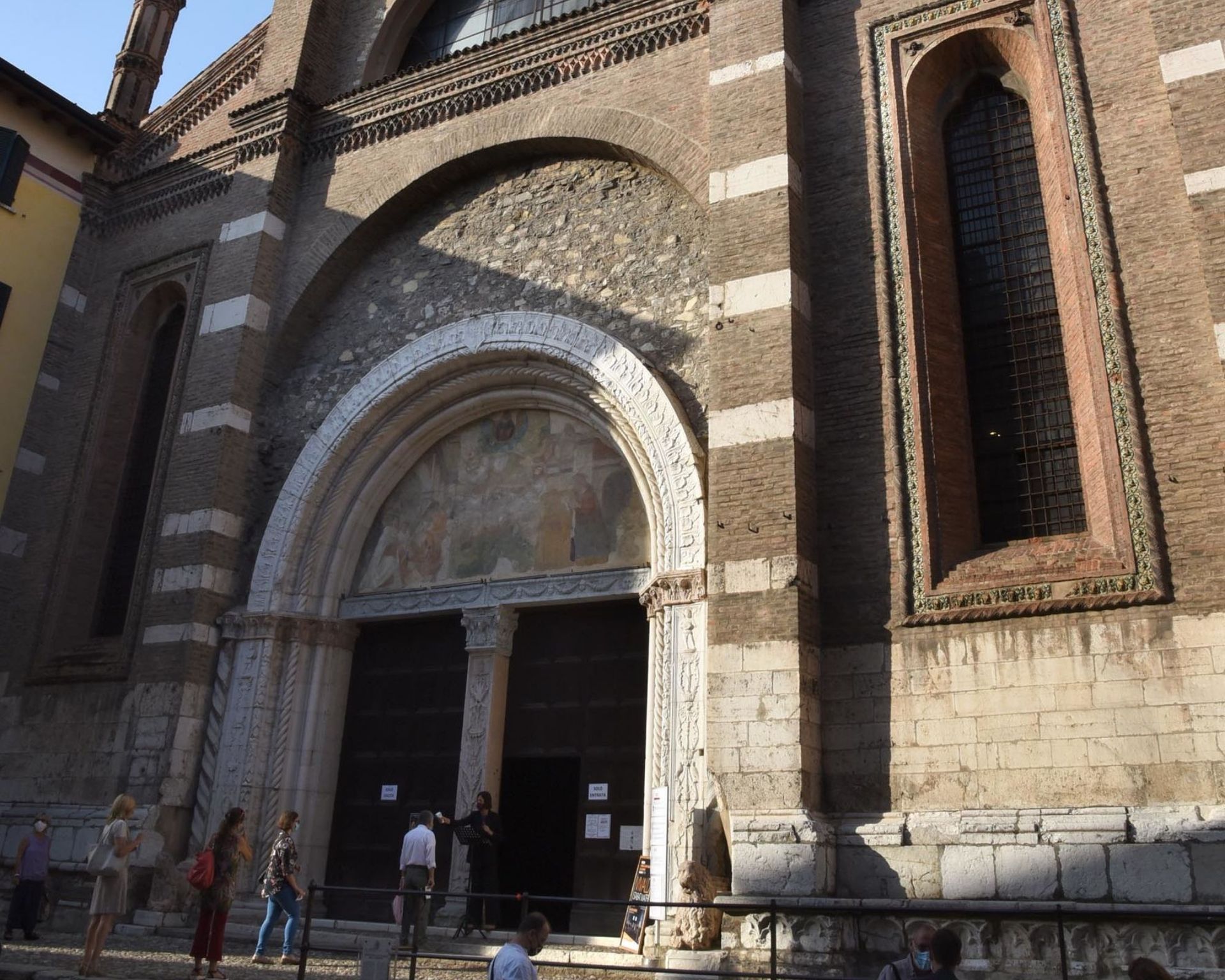
The façade, an elegant mix of Gothic and Renaissance, is still one of the symbols of the area. A landmark so powerful, it was even immortalised in art: in 1834, Francesco Hayez depicted it in the famous painting Ventura Fenaroli arrested in the Carmine Church in Brescia by the French. A powerful image that tells how much this place is part of Brescia's historical and civic memory.
THE HISTORY
The history of the church of Santa Maria del Carmine goes back to the 14th century, during the Visconti domination, with the arrival of the Carmelites of the Ancient Observance. Today, we can see traces of the early Gothic style of the building in the apse and part of the side walls, survivors of the Renaissance that changed the face of Lombard architecture.
With the arrival of the Venetian Republic in 1427, the church was enriched: terracotta pinnacles, string courses, new single-lancet windows in the apse and a bell tower designed by Bernardino da Martinengo.
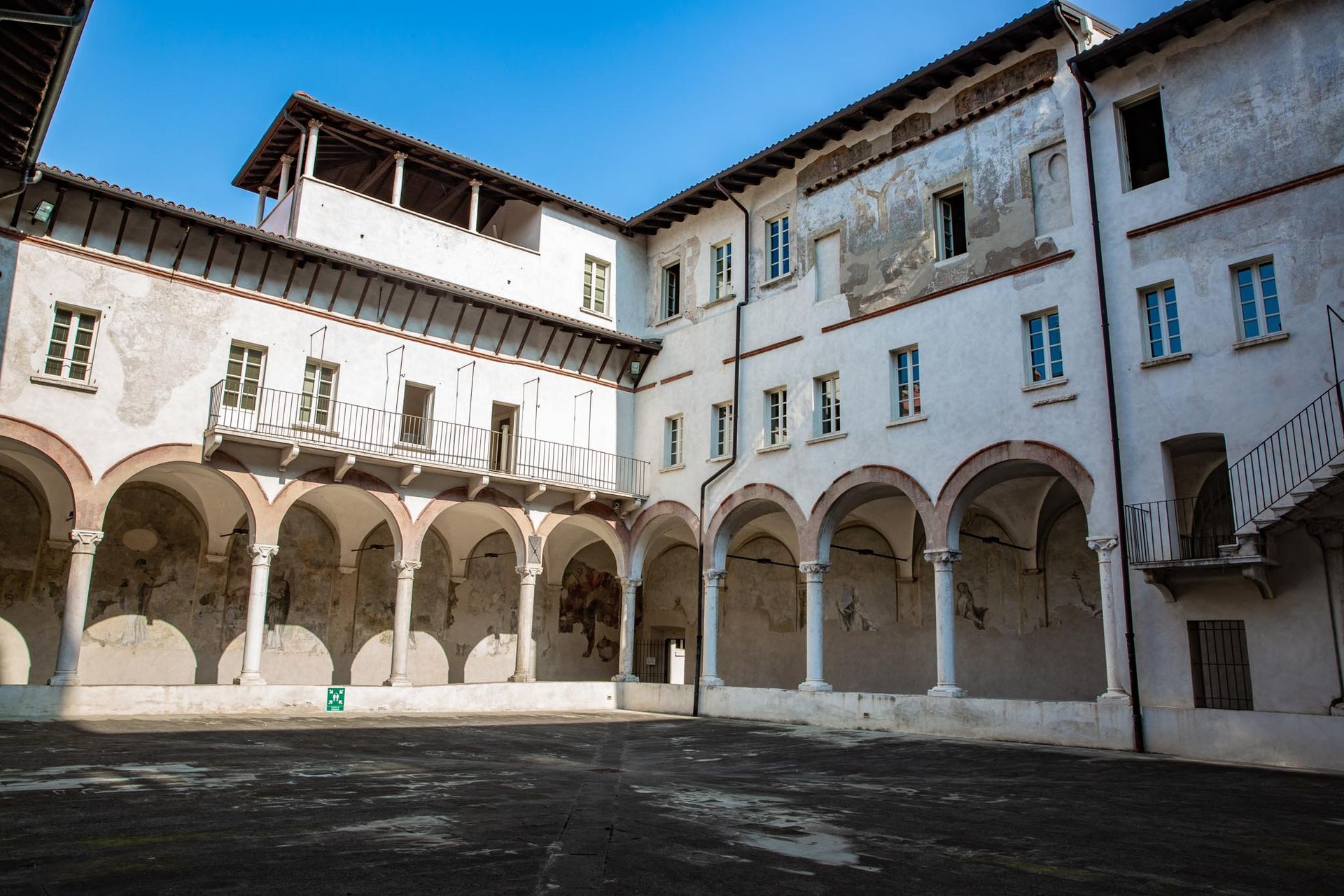
Between 1475 and 1478, there was a radical transformation: the façade was set back and redesigned with a new portal and new pinnacles. Shortly afterwards, the Venetian-style main cloister was also built. Other cloisters inspired by Giulio Romano's Mantuan taste were added in the following decades.
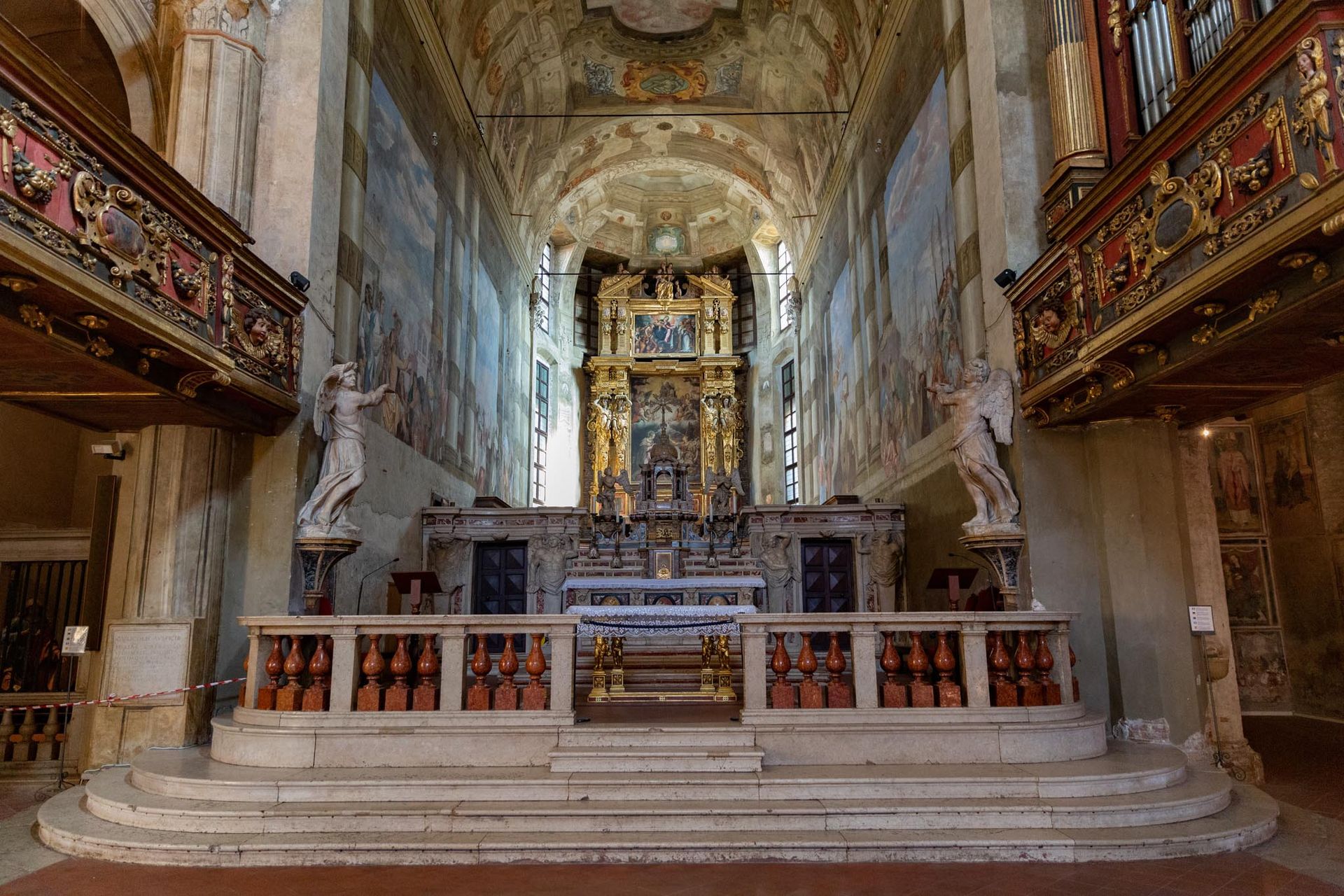
Between the 16th and 17th centuries, the interior was enriched with works such as the Annunciation by Pieter de Witte and Baroque interventions by Sandrino and Rama, which covered up many Gothic decorations. In 1634, the choir was also updated, while the rose window gave way to a large lunette window.
In 1797, with the Napoleonic suppressions, the convent was closed. But the church remains. And it continues to tell a long and layered story of art, transformation and devotion
THE EXTERIOR
The church of Santa Maria del Carmine has an exterior that reflects the stratification of epochs and styles, with a prevalence of late Gothic and Renaissance; a distinctive element are the terracotta pinnacles crowning the façade and eastern side, placed at the end of the buttresses and made possible by the widespread availability of this material thanks to the furnaces of the Martinengo Counts.
The entrance portal, added at the end of the 15th century, is a fine example of a fusion of Gothic and Renaissance: consisting of two openings divided by a Corinthian column adorned with candelabra motifs, it features Solomnic columns and Gothic motifs probably from the previous façade and a slightly splayed design of Franco-German and Venetian derivation;
THE INTERIOR
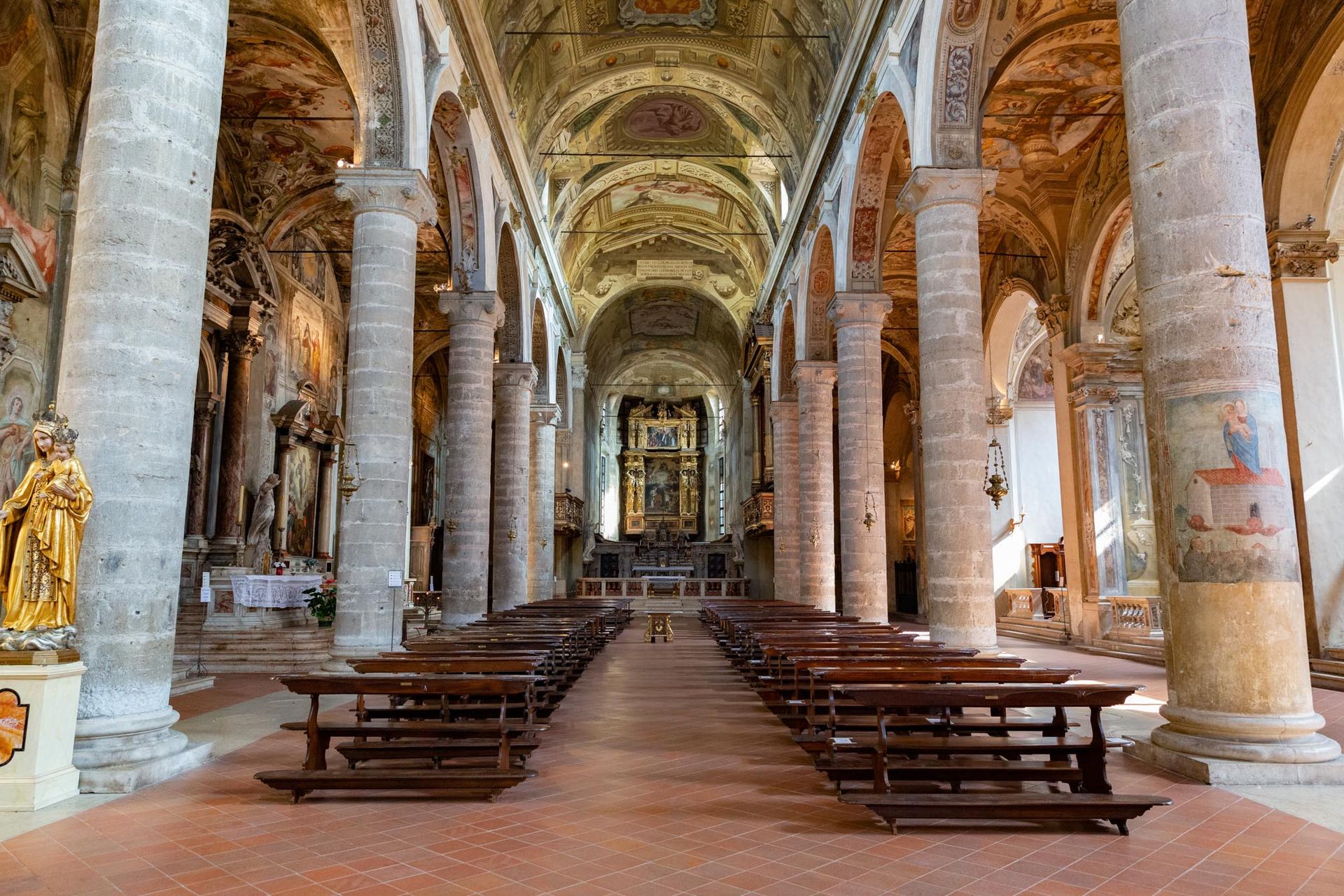
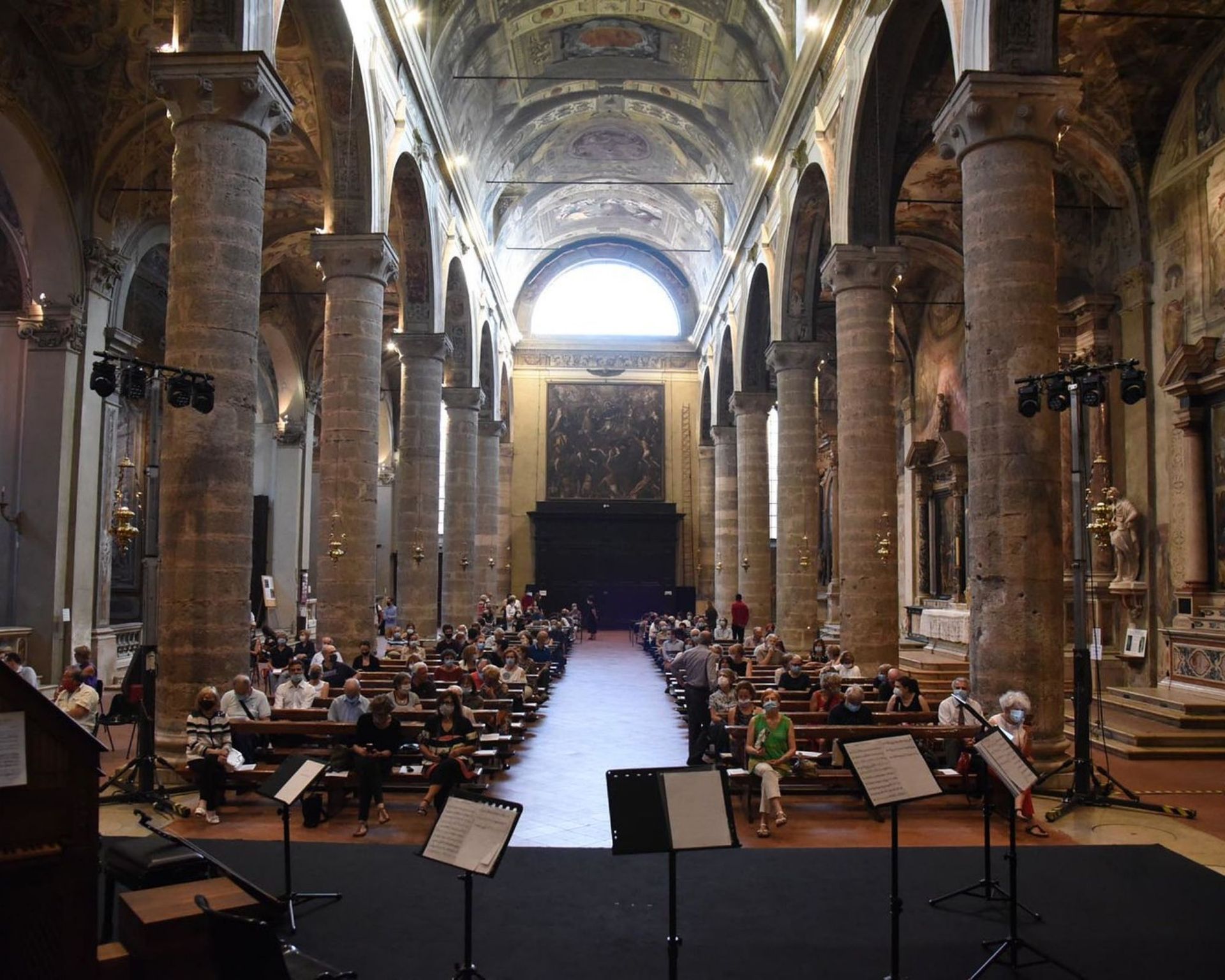
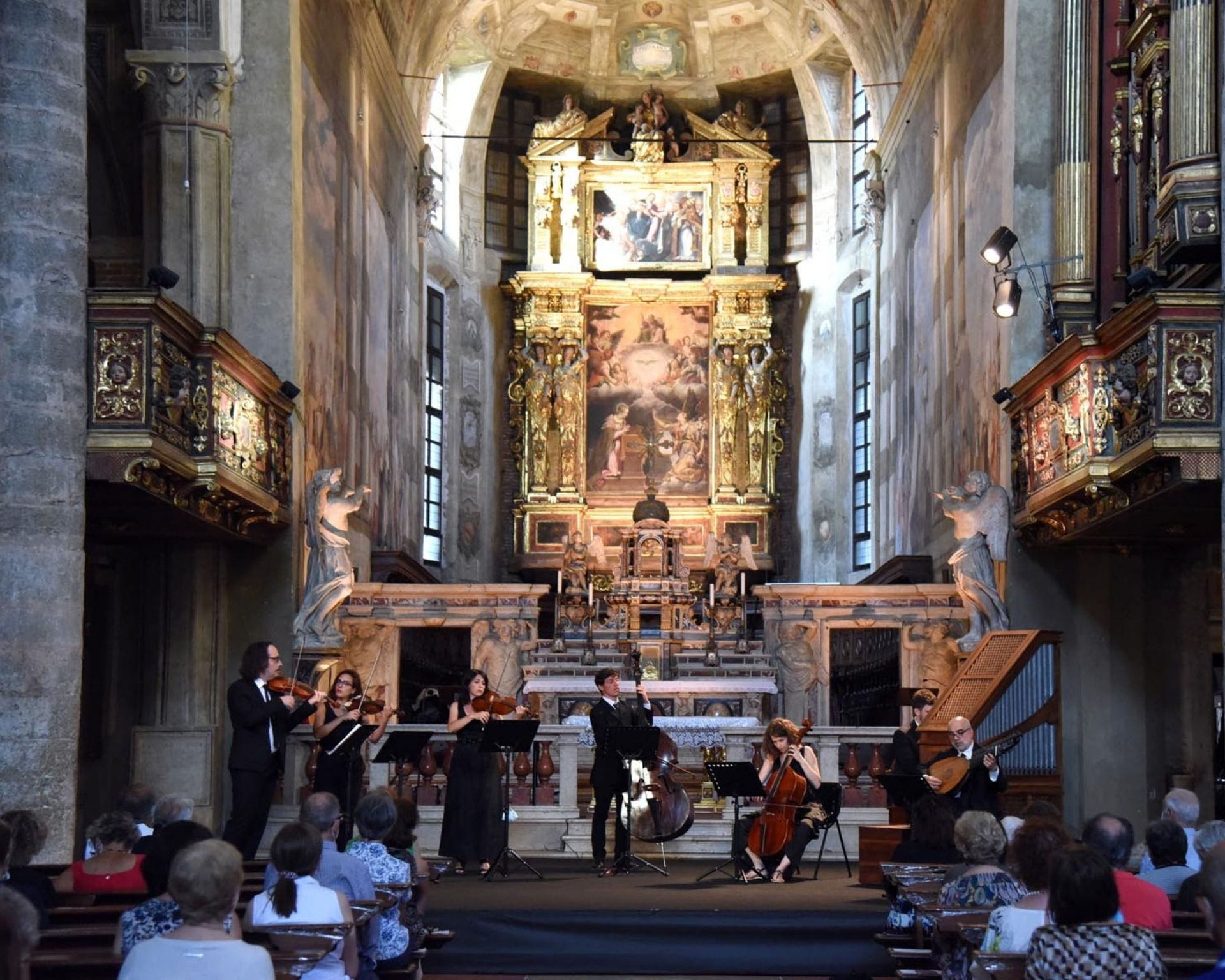
The interior of Santa Maria del Carmine is spacious and solemn: three naves, the central one surmounted by a barrel vault, the lateral ones by cross vaults, separated by columns with medieval capitals. The architecture is clean, the atmosphere intense.
The church still houses important treasures: in the Averoldi Chapel we find 15th-century frescoes by Vincenzo Foppa, a crucified Christ and a fine Renaissance altar with the sarcophagus of Giovanni Pietro Averoldi. Immediately afterwards, the Fenaroli Chapel, linked to the figure of Ventura Fenaroli, houses the Massacre of the Innocent by Pietro Marone, frescoes by Zanardi and Monti and a 17th-century tomb.
Other works include the Annunciation altarpiece by Pieter de Witte, a 15th-century terracotta Deposition, the St Michael the Archangel altarpiece by Palma il Giovane and frescoes from the Bembo circle.
A stand-out piece is the imposing altar of the Madonna of St. Luke, known as the Madonna delle Brine, sculpted by Giovanni Maria Morlaiter in the 18th century. There is also the Disciplini altarpiece, designed by Caylina the Elder and Bembo, and the precious Baroque organ crafted by Meiarini and Antegnati, which still plays today, loud and clear.