Basilica of Santa Maria delle Grazie
Basilica of Santa Maria delle GrazieVia delle Grazie, 13, 25122, Brescia (BS)santuariodellegrazie.brescia.it
Santa Maria delle Grazie is a baroque marvel in the heart of Brescia, at the crossroads of Via Capriolo and Via delle Grazie. Its history dates back to the 16th century, but it was in the 17th century that it saw an explosion of beauty, with frescoes, gold decorations and details that leave the visitor breathless.
Three of Moretto's works found a home here - two are now housed in the Tosio Martinengo art gallery. Next to the basilica stands the shrine of the same name: an elegant neo-Gothic building from the 19th century.
THE HISTORY
But it all began much earlier. The Hieronymites, who had been present in the city since the 15th century, lost their first church during the sack of Brescia in 1512. Venice razed everything to the ground. But the friars refused to give up.
In 1519, Santa Maria delle Grazie was founded in the old Santa Maria di Palazzolo, a place to be saved. But more space was needed. In 1522, work began on the construction of the new church, based on a design by Brother Ludovico Barcella.
Consecrated in 1539, it grew again thanks to the Jesuits, who arrived in 1668 and relaunched the entire complex.
The monastery closed in 1797, but the church remained. In 1963, Pope John XXIII proclaimed it a minor basilica.
THE EXTERIOR: WELCOMING AND DISCREET
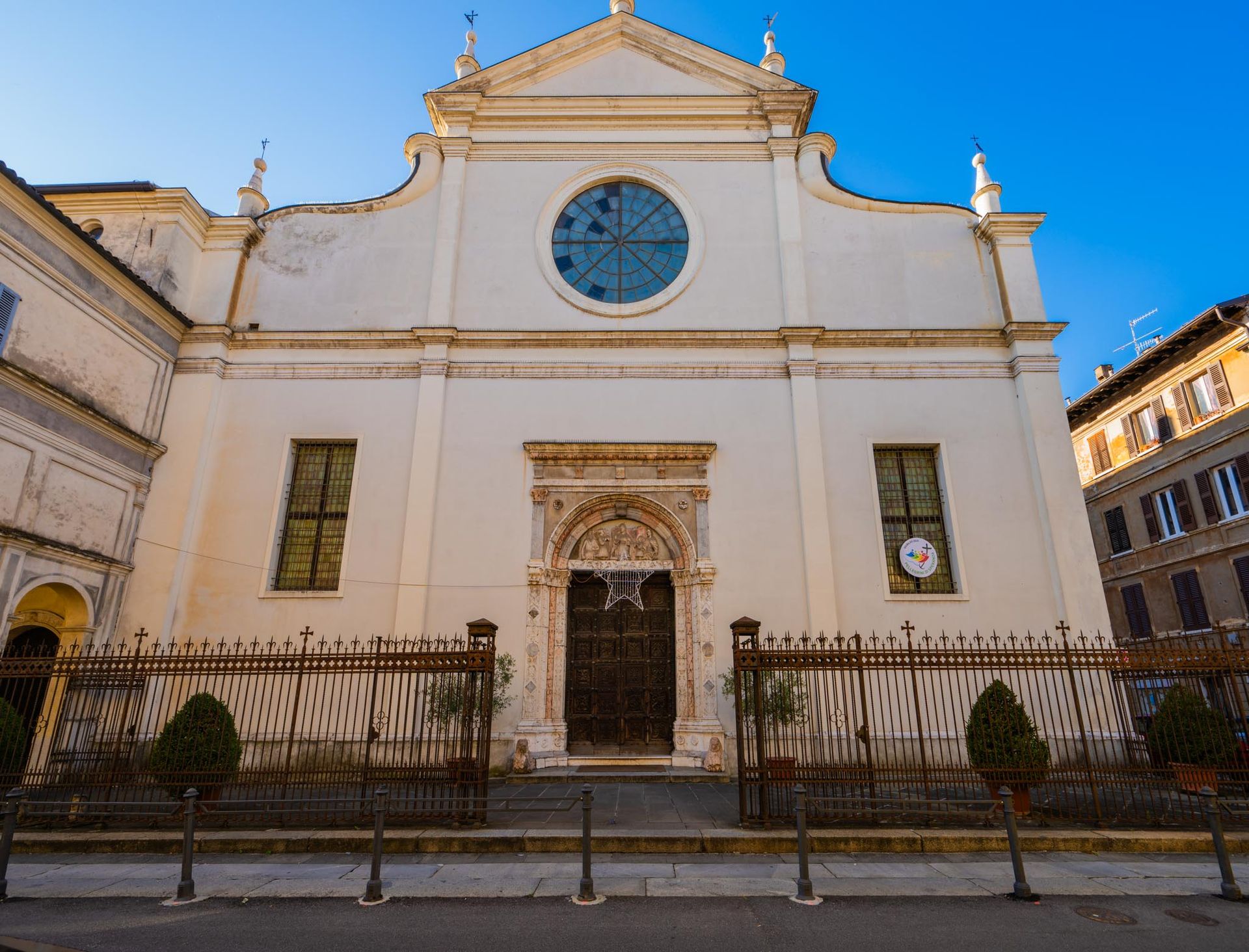
The Basilica of Santa Maria delle Grazie welcomes you quietly: a small parvis, a wrought-iron gate and a tall column surmounted by a statuette of the Madonna of Peace. The latter is in bronze and was sculpted by Emilio Magoni in 1921. The previous column? It was swept away by a hurricane in 1873. In Brescia, if something falls down, you build it again. Better than before.
The façade is simple and divided into three sectors by simple pilaster strips. The upper section features a rose window with an 18th century stained glass scene by Giovanni Bertini: it depicts the Nativity and captures the light like few other things in the city.
At the centre of the façade is the entrance portal: a masterpiece crafted in Botticino marble and red Verona marble, salvaged from a church demolished in 1517. Above is an inscription commemorating the figure who made this possible: Matteo Leoni, captain of fortune, who funded the portal of the Madonna delle Grazie.
A mix of Gothic and novelty, devotion and ambition. A highlight of Brescian sculpture straddling two eras.
THE INTERIOR: DECORATED AND EXQUISITE
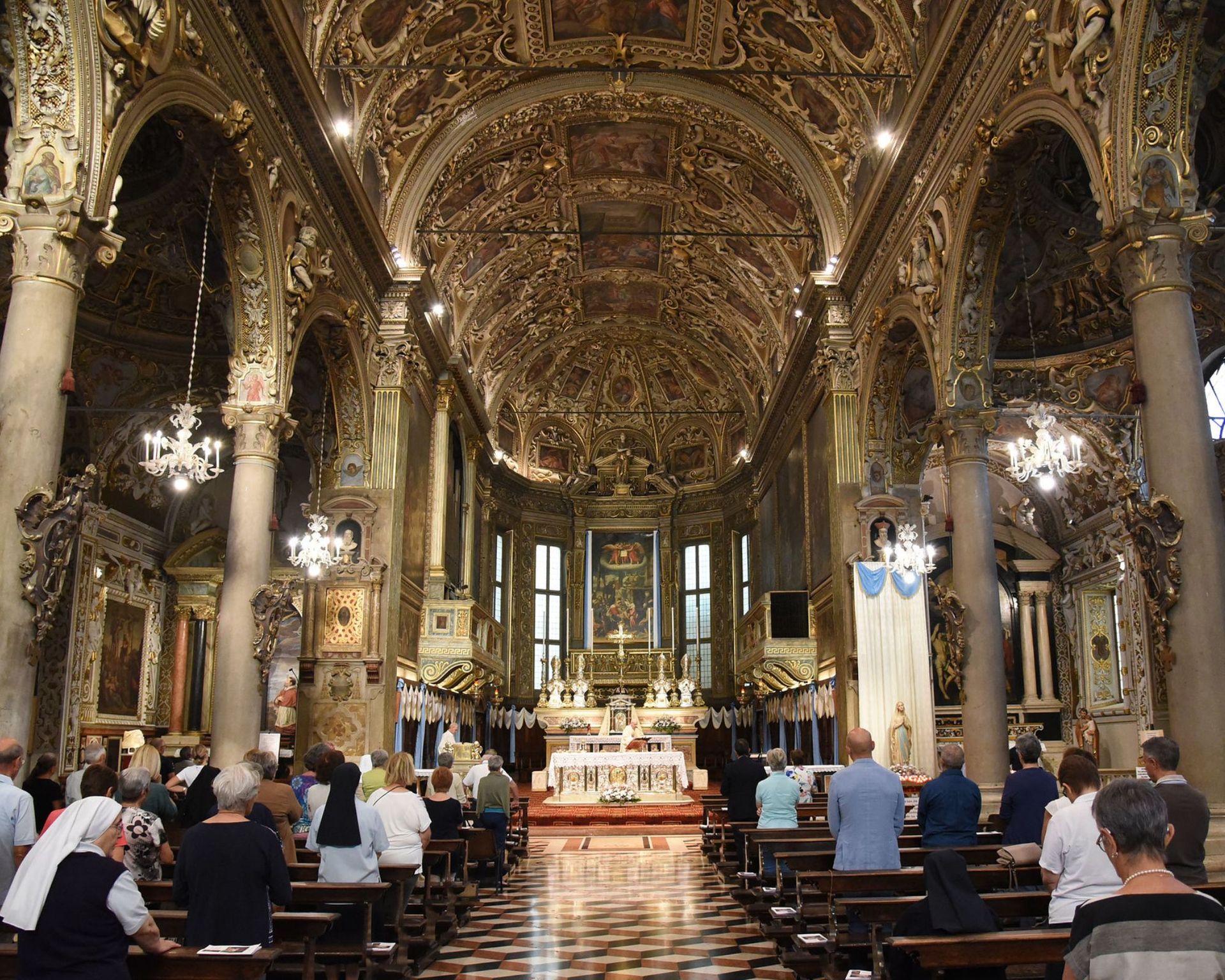
Entering Santa Maria delle Grazie is like crossing the threshold of Brescia's most spectacular Baroque.
A three-nave structure with a central barrel vault and side domes housing seven altars on each side. At the back, a deep presbytery is concluded by a polygonal apse.
But it’s the decoration that envelops everything: frescos and gilding abound, all with exquisite attention to the smallest detail. It’s an explosion of art that turns every corner into pure wonder.
Francesco Giugno painted the central vault with five medallions dedicated to the Virgin Mary; Giovanni Mauro della Rovere worked on the presbytery; while Girolamo Muziano narrated the life of St Jerome in the dome of the altar dedicated to him.
Here, every inch speaks volumes: in Brescia, there is no skimping on beauty.
Ph Christian Penocchio