Route No. 14 | From Folzano to Via Astolfo Lunardi
This is where the city ends. Or maybe where it begins.
Distanza
circa 4 km
Durata
circa 1 ora
This is where the city ends. Or maybe where it begins.
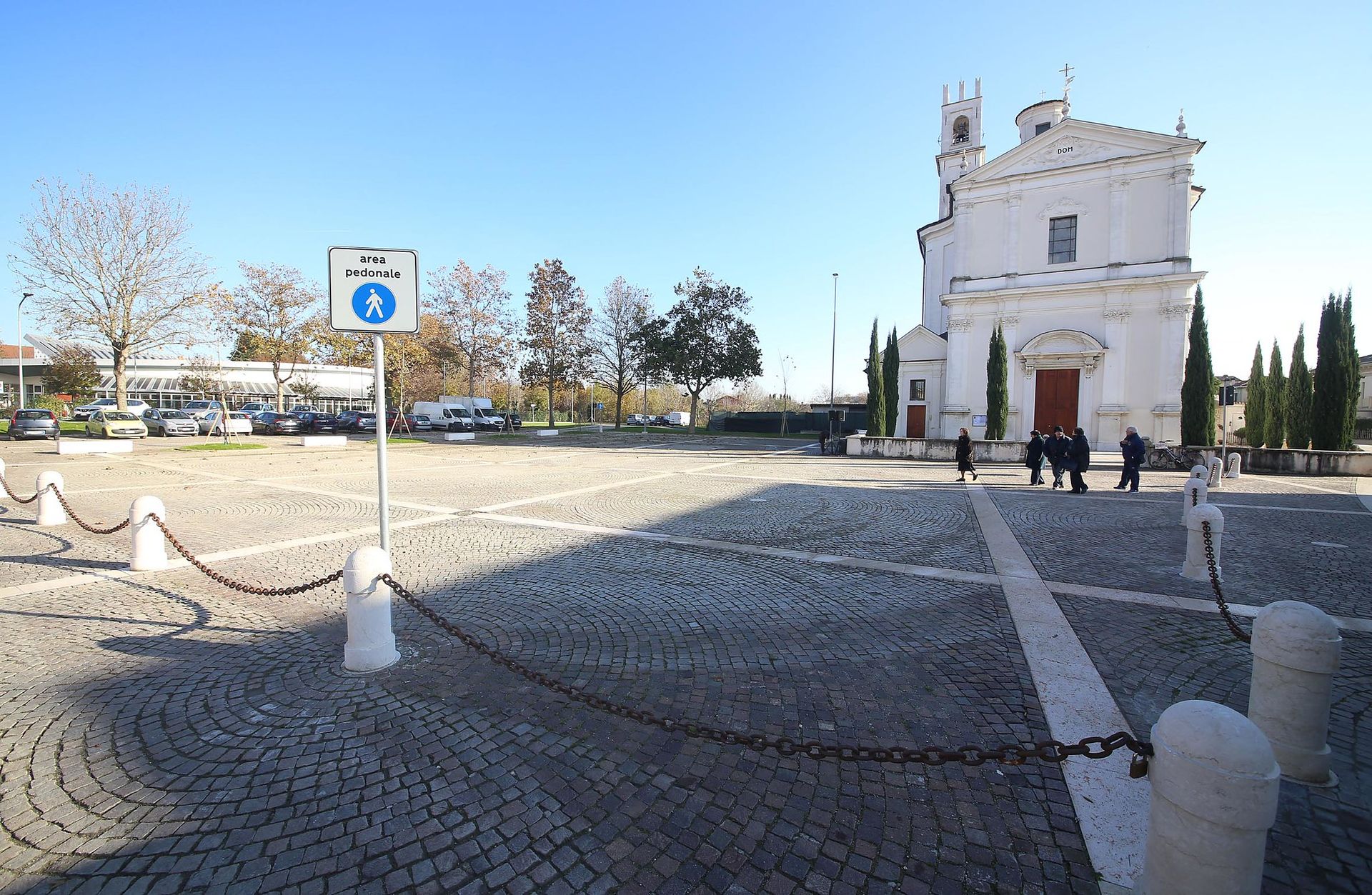
Folzano is where the city, to the south, lets itself go and shows its most genuine side. Among fields, farmsteads and dirt tracks, you can discover a slice of rural Brescia that still looks much as it did two centuries ago.
Along the way you’ll find Parco della Pace and Parco della Collinetta, two green spaces far from the noise, next to a farming area that has resisted concrete. Here you can still recognise the same layout of fields and roads you see on 19th-century maps.
It’s not nostalgia, it’s identity. Today all this forms part of the PLIS (Local Park of Supra-municipal Interest) of the hills: a project that links Parco delle Cave, the Maddalena, Ratto and Picastello hills and the course of the River Mella.
A green belt that protects the city.
The church of San Silvestro: a gem signed by Tiepolo.
In the heart of Folzano, the church of San Silvestro holds a surprise few expect: an altarpiece attributed to Giandomenico Tiepolo. An intense, vibrant work that dominates the main altar of the church. But it’s not the only one – look for the painting by Francesco Lorenzi on the left-hand altar too: it’s a riot of colour you won’t forget!
Living countryside. This is real farmland.
To the south, between Folzano and Via Lunardi, you walk through the true Brescian countryside.
Seasonal crops – wheat, maize, barley, alfalfa – feed livestock and give life to local products such as Grana Padano PDO, robiola cheeses and provolone.
The smell of hay, the song of larks, a tractor passing by.
Here the land is not a memory. It’s everyday work.
You can start your journey from San Zeno–Folzano station (on the lines to Parma and Cremona, with trains every hour). You’ll finish just a short walk from Lamarmora metro station. If you want to cut it short, there’s bus line 4. But you’d miss the best part.