Vittoria alata

Photo credit: Rapuzzi
Vittoria alataVia dei Musei, 81/B, 25121, Brescia (BS)
An eternal symbol. A rediscovered masterpiece.
Among the most fascinating Roman bronzes that have survived till now, the Winged Victory of Brescia is much more than a statue; it’s an icon of the city, a timeless work of art and a silent witness to history. Today it stands in the heart of the Capitolium, where it was found in 1826, hidden and protected, ready to shine again.
Origin and Style
Produced in Roman times, after 69 AD, in a single casting, the Winged Victory was inspired by Hellenistic models, in particular the Aphrodite Urania of the Cyrene type.
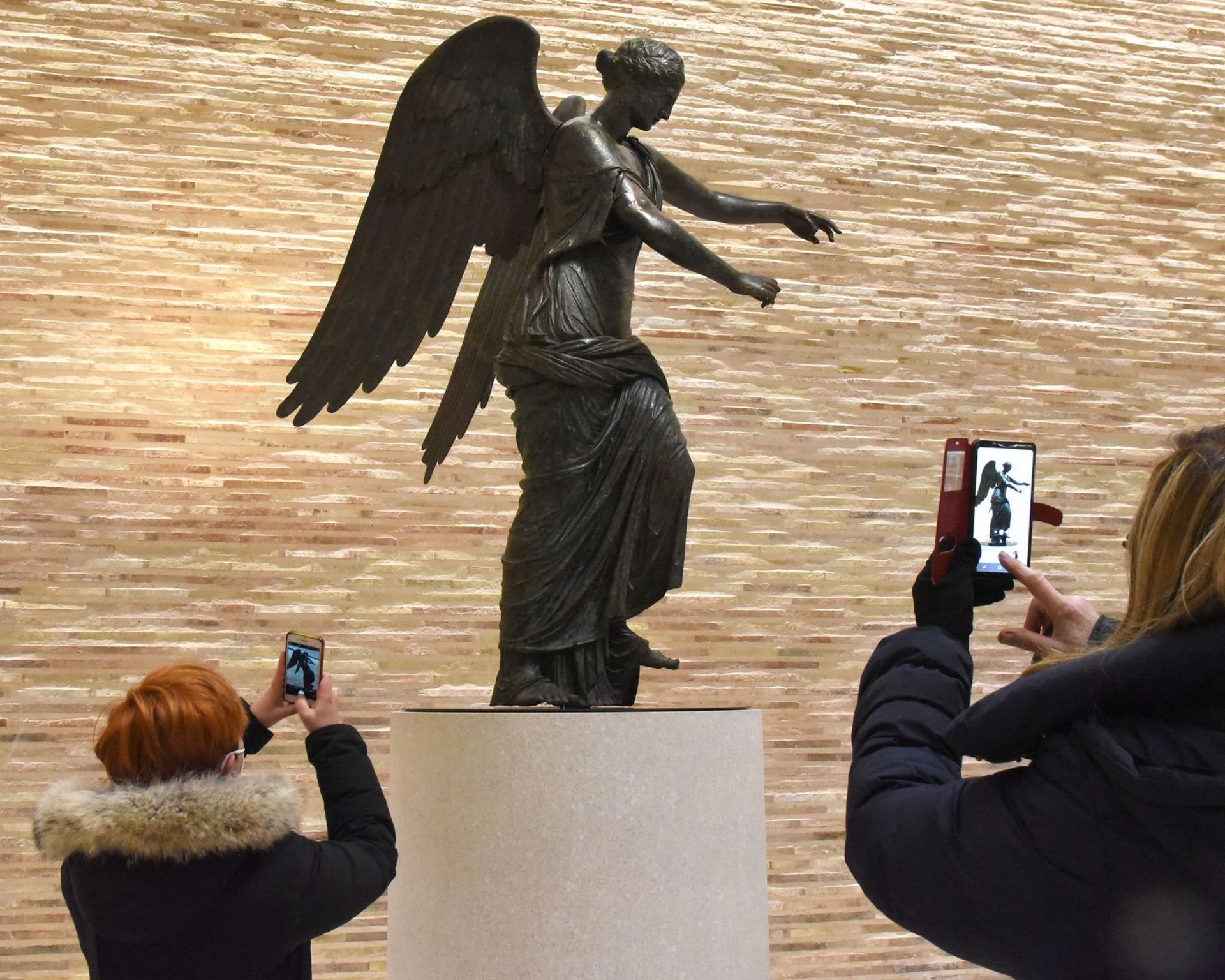
The female figure has a slightly twisted torso, her arms arranged with archaic elegance, and wears a chiton fastened at the shoulders, covered by a cloak (himation) that wraps around her legs. Her left leg is raised, as if to rest on a helmet, a gesture full of tension and grace. She originally had no wings: these were added in Roman times to transform her into the goddess Victoria, in keeping with the figures found in the imperial forums of Rome and Constantinople. Her head was adorned with a fine silver and copper diadem.
The statue had been hidden in the western cavity of the Capitolium, probably to save it from barbarian raids. Thanks to this hiding place, it has come down to us in remarkable condition.
It was discovered on 20 July 1826, dismantled into several parts, and immediately attracted the interest of scholars and archaeologists from all over Europe. During the First World War, it was transferred to Rome for protection. It returned to Brescia in 1920, welcomed by a solemn ceremony organised by senator Pompeo Gherardo Molmenti. Between 1948 and 1949, it was exhibited at the Kunsthaus Zurich museum as the highlight of an exhibition on Lombard treasures.
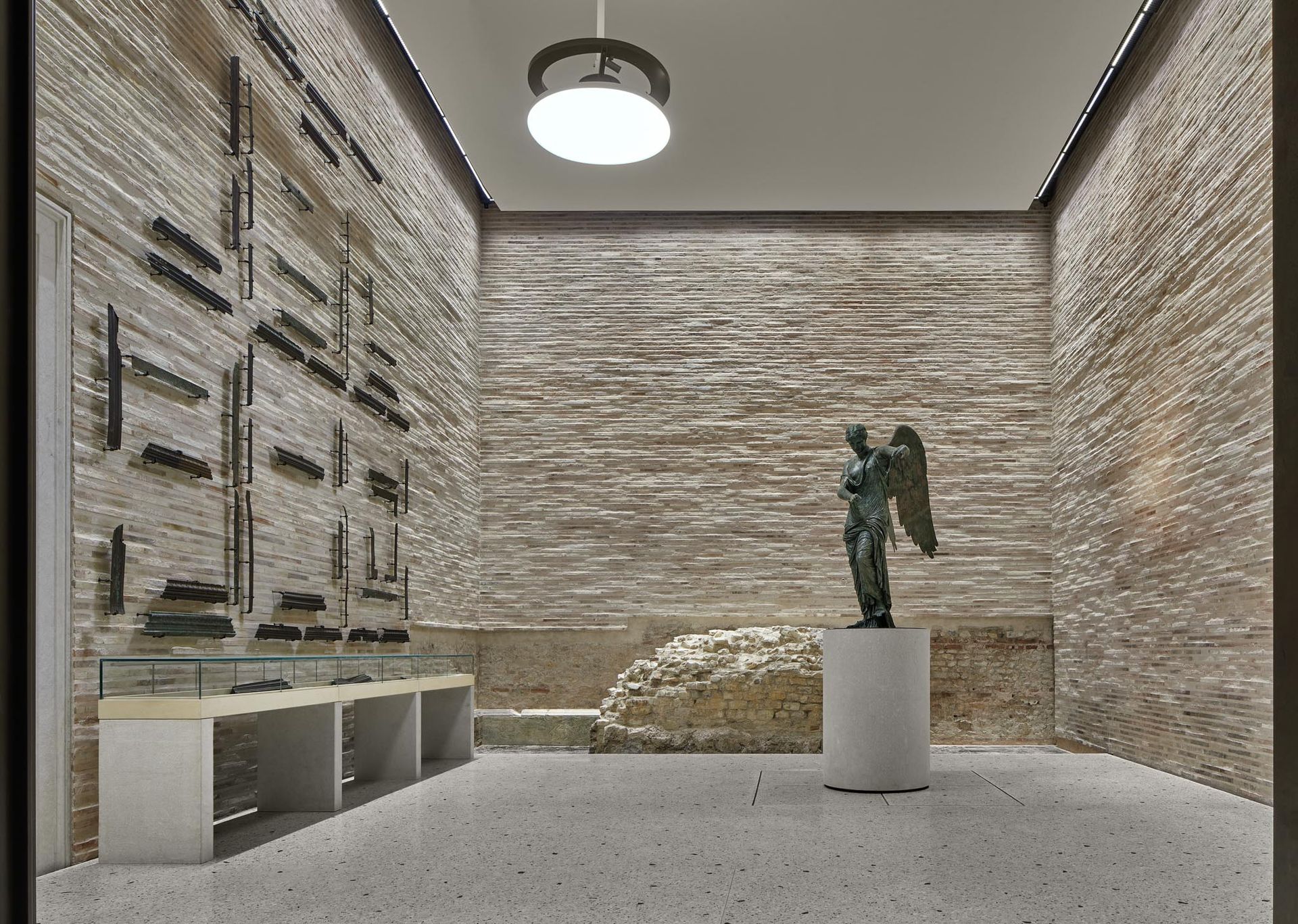
Photo credit: Alessandra Chemollo
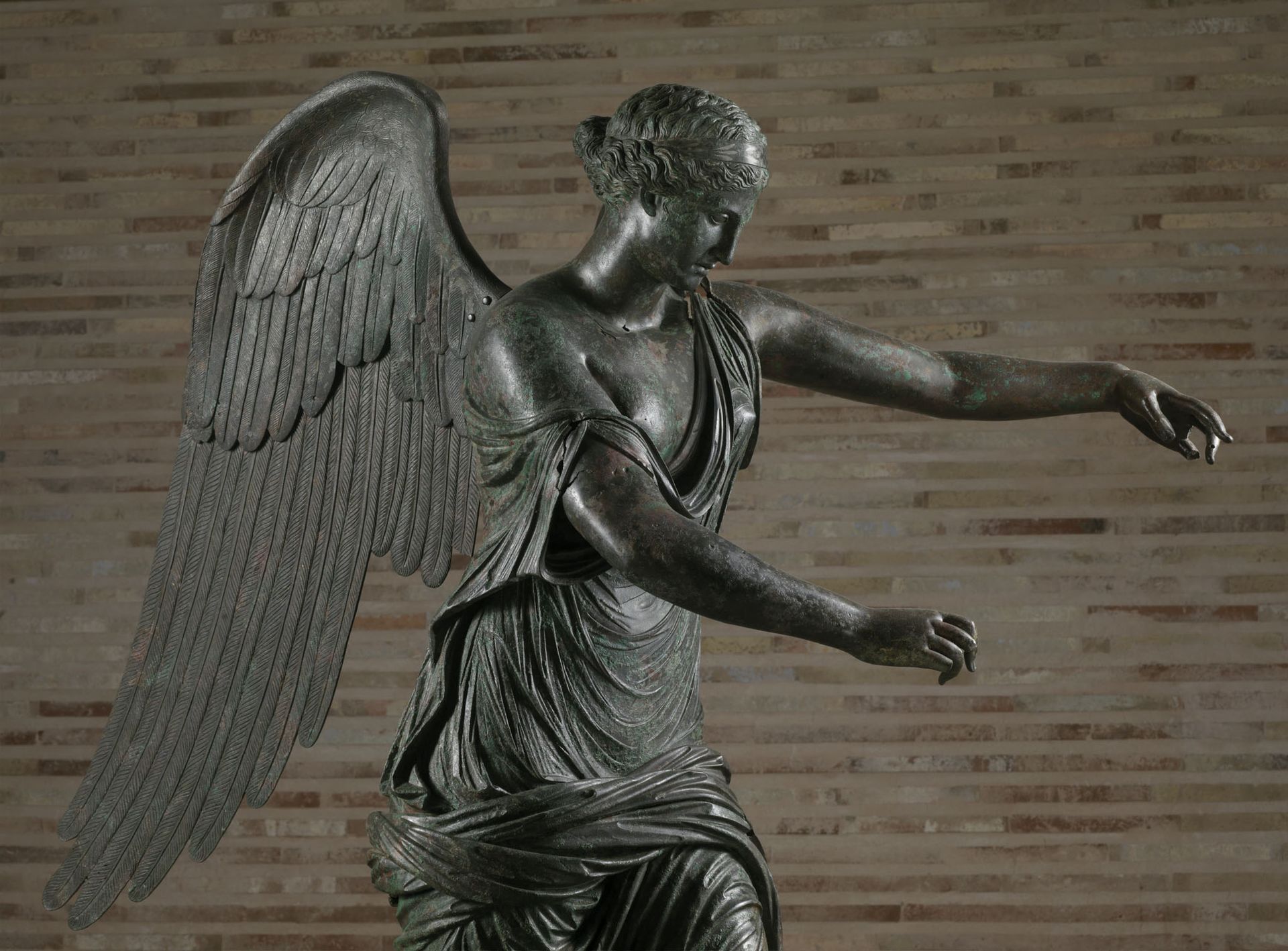
Photo credit: FotoStudio Rapuzzi
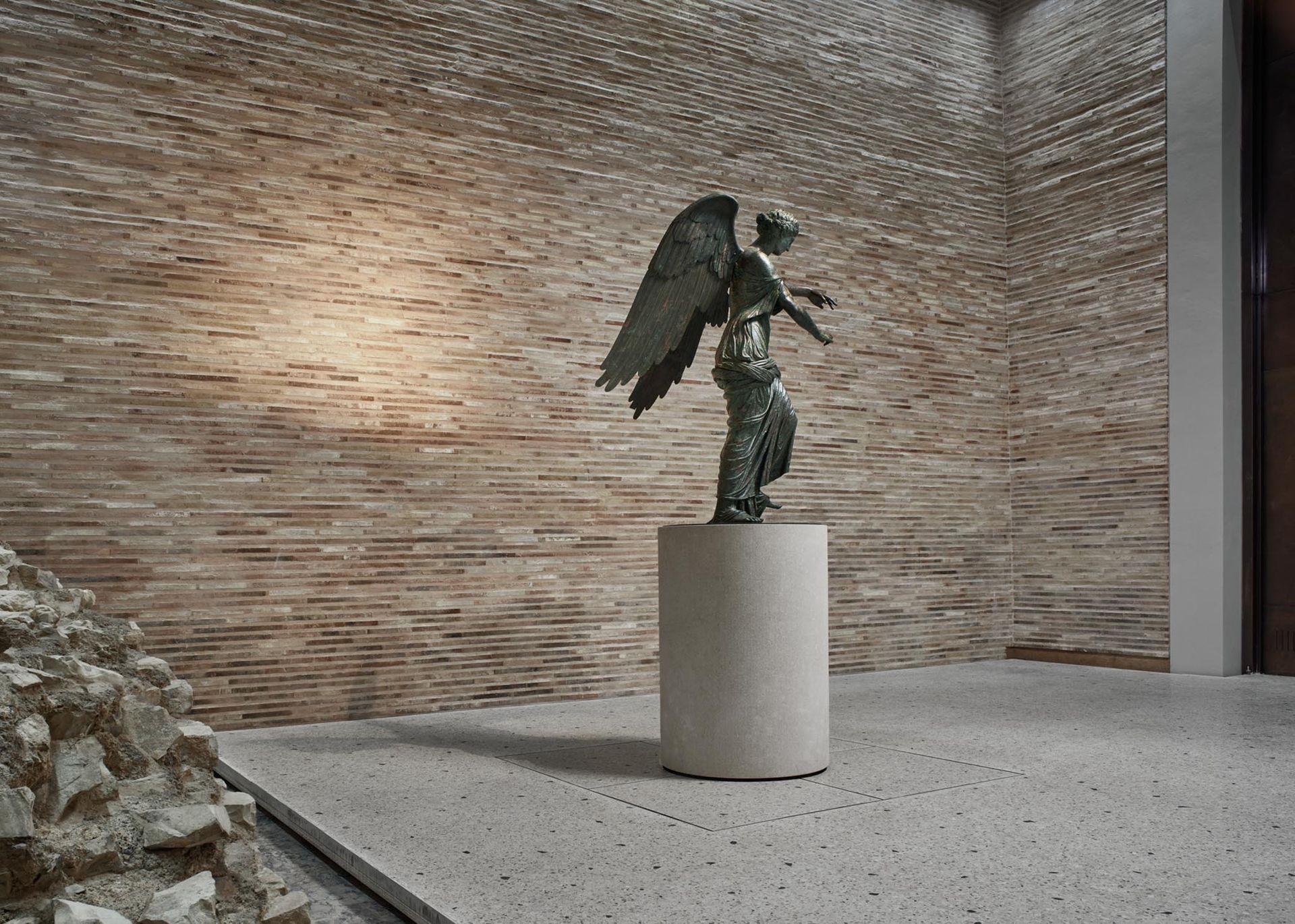
Photo credit: Alessandra Chemollo
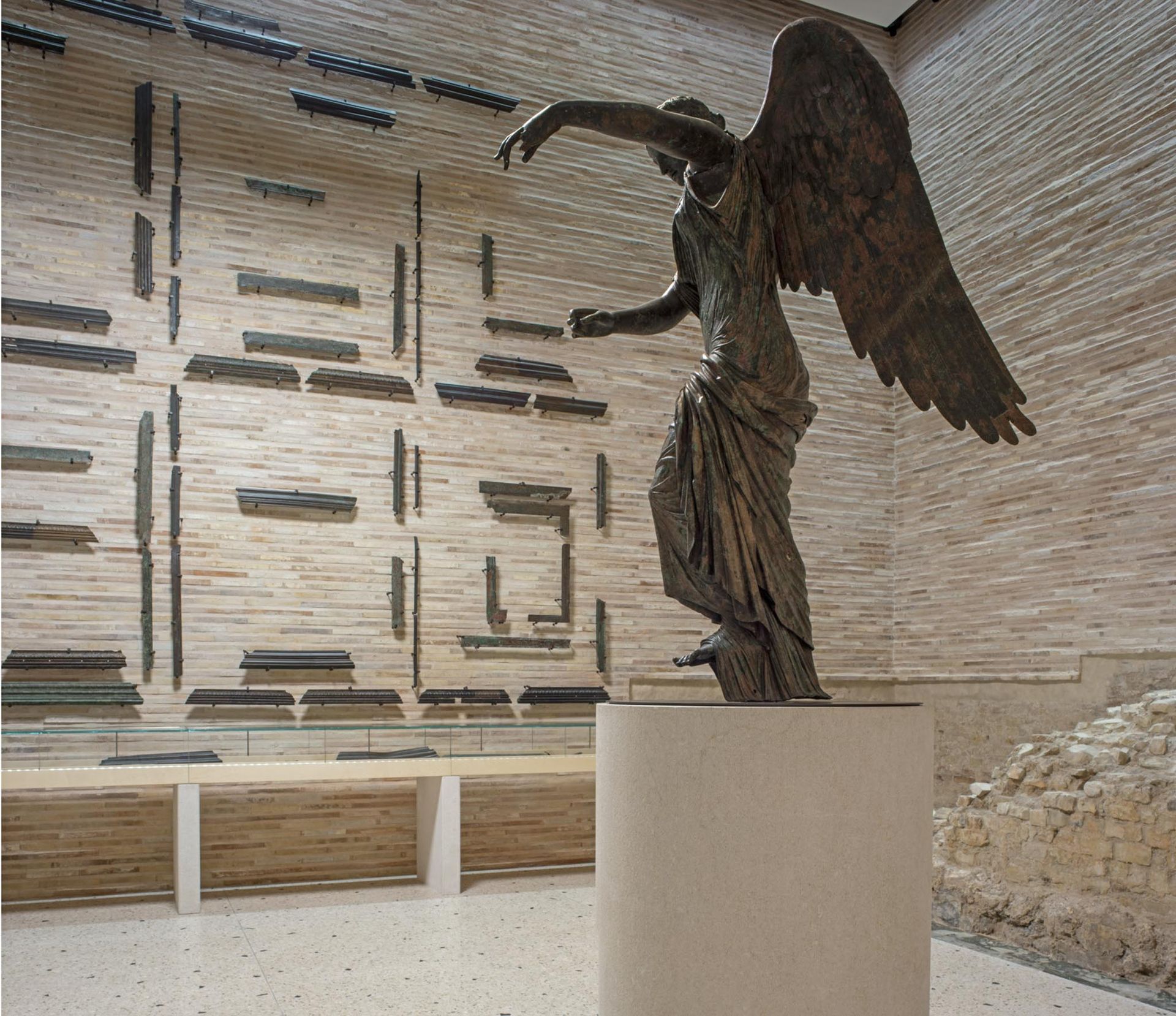
Photo credit: Alessandra Chemollo
Ph Christian Penocchio
Studies, hypotheses, certainties
For decades it was believed that the statue was originally created as Aphrodite and was only later transformed into Nike (Victory), perhaps at the behest of Augustus, when the forum was rebuilt after the Battle of Bedriacum. But more recent XRF analyses have disproved this reading: the body and wings are coeval. The statue was conceived from the beginning as Winged Victory.
In 2018, the Winged Victory was the focus of a major restoration project at the Opificio delle Pietre Dure, involving archaeologists, engineers and restorers in a unique interdisciplinary undertaking. An intervention that restored light, matter and voice to this extraordinary figure.
Today, the Winged Victory stands in the Capitolium Roman temple of Brescia, as part of a new exhibition designed by Spanish architect Juan Navarro Baldeweg.
An environment designed to protect it with an earthquake-proof base, but above all to enhance it: as a work of art, as historical testimony, as an identity symbol of the city.