Roman Theatre
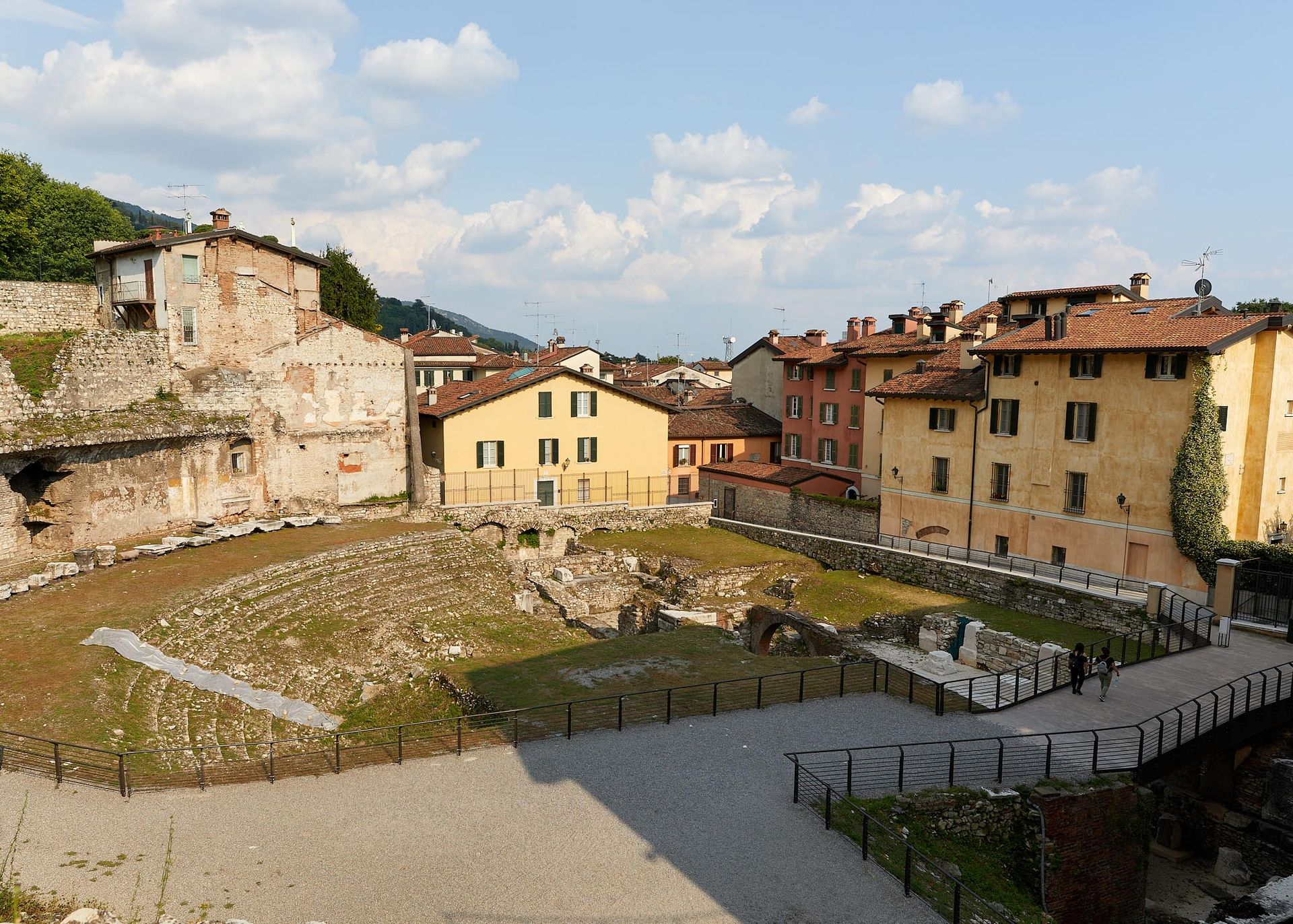
Roman Theatre Via dei Musei, 55, 25121, Brescia (BS)
In the heart of the city, a few steps from the Capitolium and Piazza del Foro, the Roman Theatre of Brescia is one of the largest in ancient northern Italy.
Today it echoes with visitors' footsteps, while in the past it echoed with the audience's heartbeats: up to 15,000 spectators, ready to listen, to watch, to live.
THE THEATER
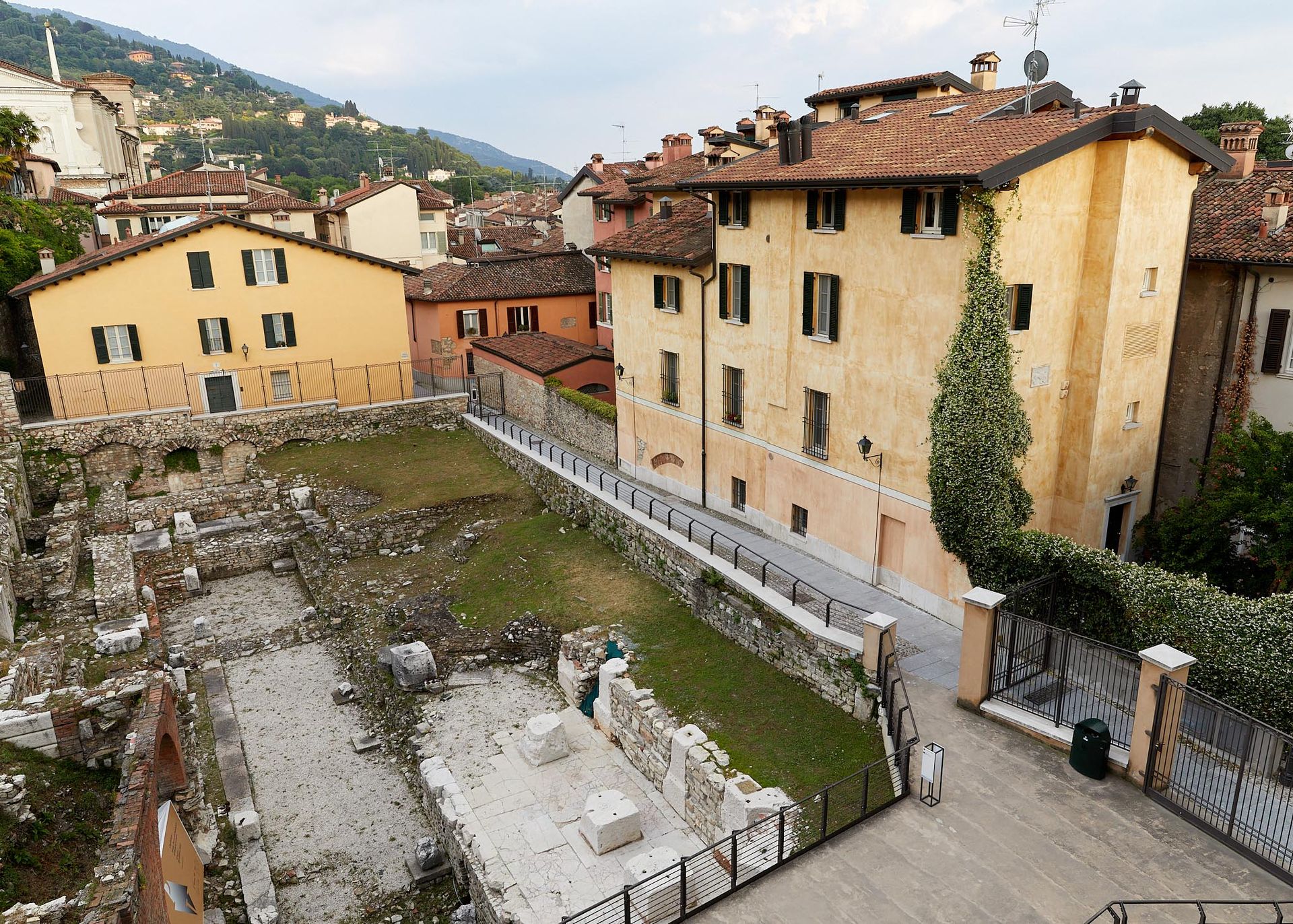
Built in the Flavian period, the theatre was directly connected to the nearby temple by a long portico and a hall punctuated by Tuscan pillars. In the 3rd century it was extended under Septimius Severus, then damaged by fire and earthquakes. Yet, it remained in use until 1173.
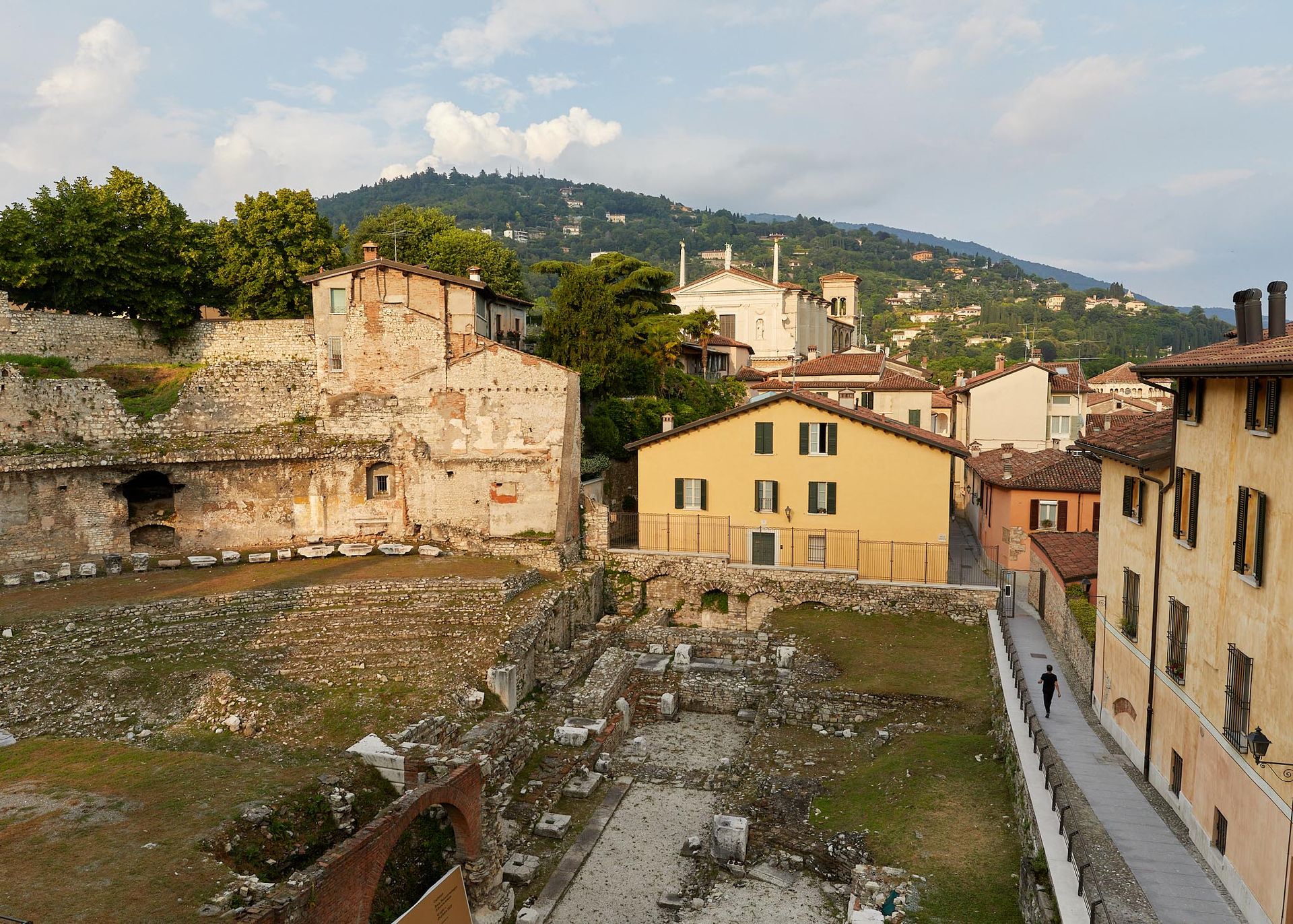
Over time, the city was built over it. But in the 19th century, between excavations and demolitions, it re-emerged. Except for one part: Palazzo Maggi Gambara, which still occupies the west wing. It wasn’t torn down for one reason: its frescoes were (and are) too valuable.
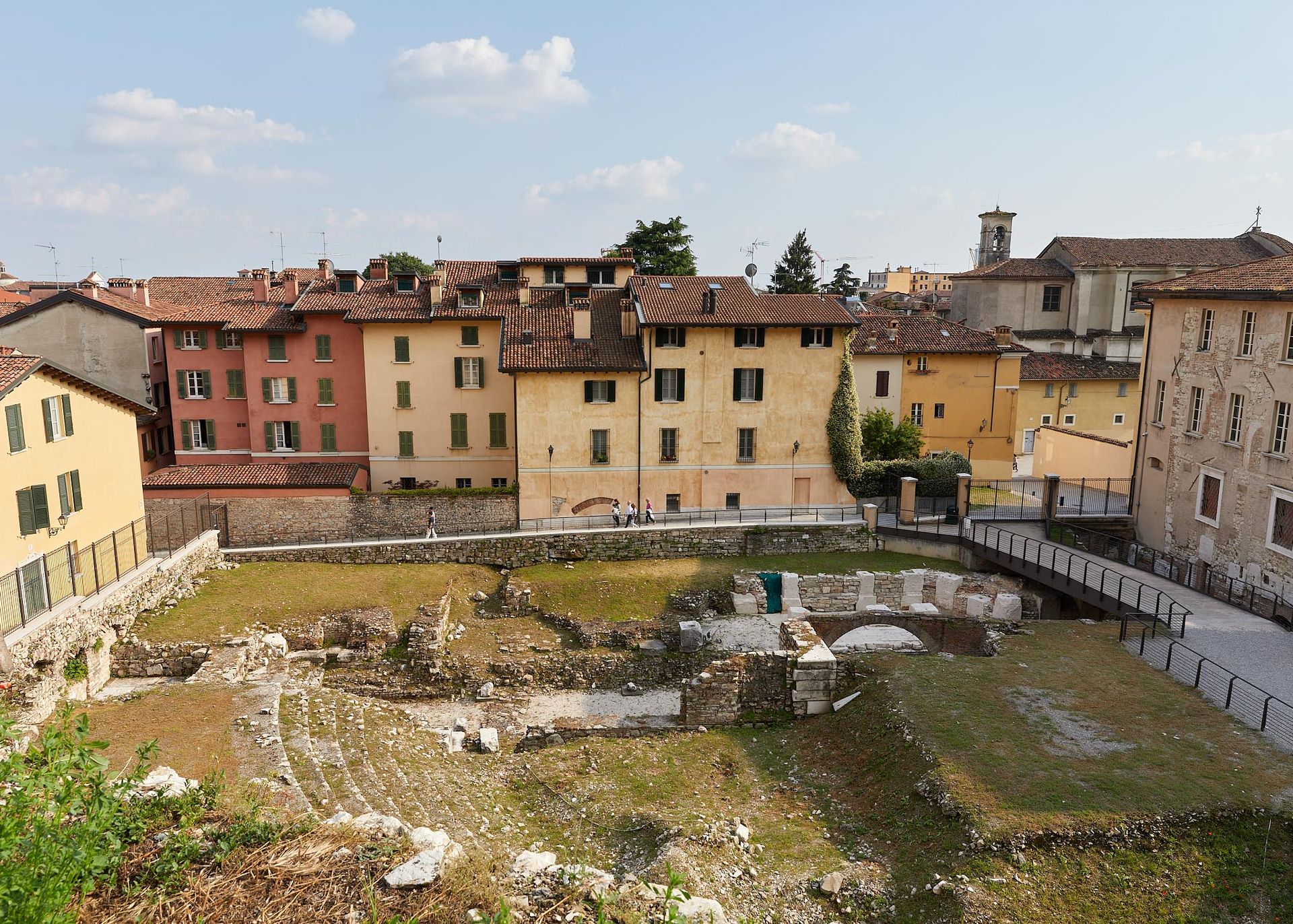
Built exploiting the slope of the Cidneo Hill, the theatre is reminiscent of Greek models, where the tiers of seats rest on the ground. The lower rows are still visible, while those supported by arches have collapsed over time. But the layout remains legible: a hemicycle 86 metres wide, almost 34 metres high, with a 48 metre long stage. Larger than that of Herculaneum, close in size to Catania, Taormina and even Verona.
Today you can admire the steps, the stage, the outer wall, as well as fragments incorporated into the building. Between ancient floors and late Roman walls, the theatre continues to tell its tale.
©Archivio Fotografico Civici Musei di Brescia – Photo Tomás Quiroga
©Archivio Fotografico Civici Musei di Brescia – Photo Tomás Quiroga
©Archivio Fotografico Civici Musei di Brescia – Photo Tomás Quiroga