Vittoria Square
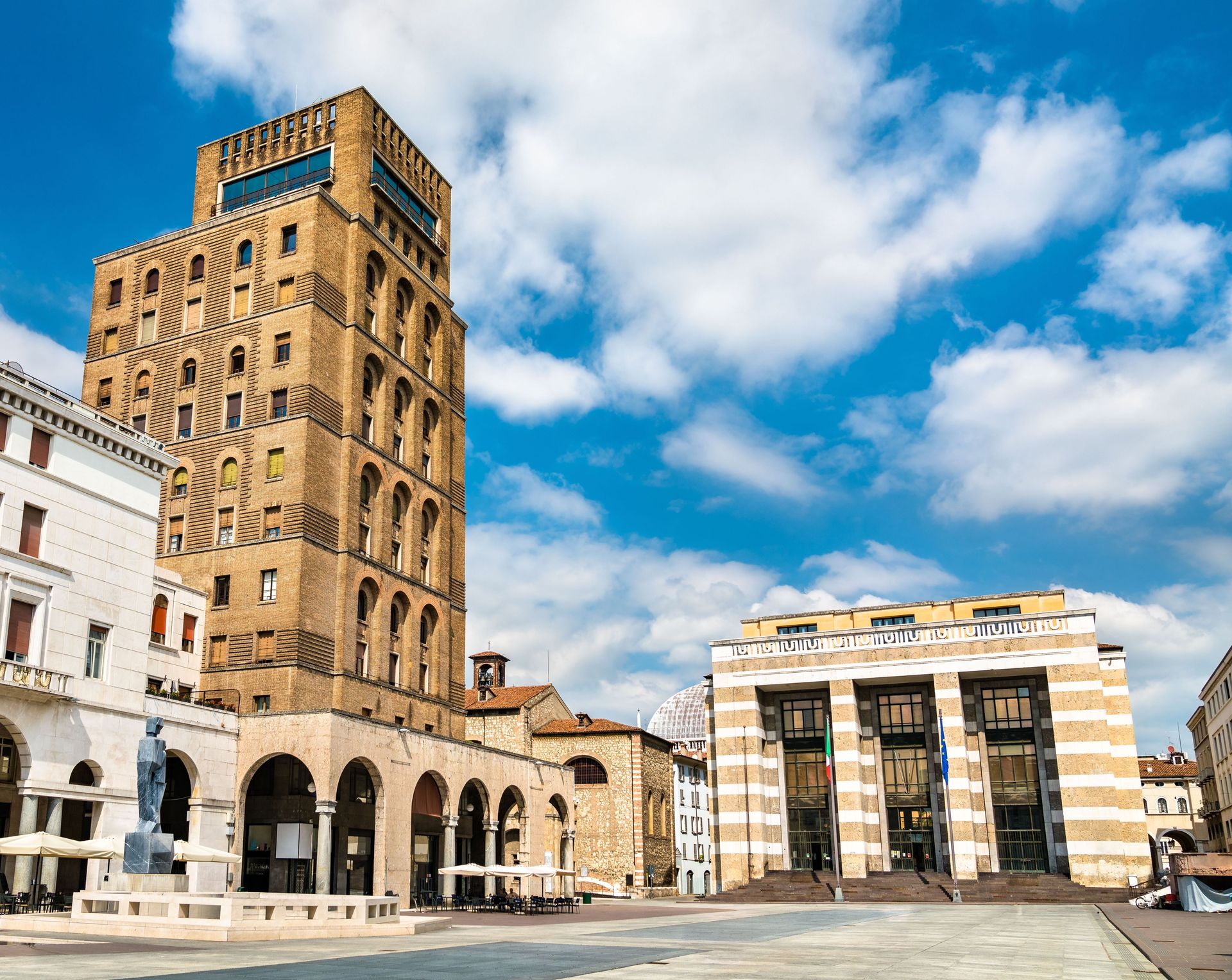
Vittoria SquarePiazza della Vittoria, 25122, Brescia (BS)
Between monumental geometries and memory carved in stone, Vittoria Square is one of Brescia's most iconic urban spaces.
THE HISTORY
Built between 1927 and 1932 to a design by architect Marcello Piacentini, it’s considered one of the finest examples of rationalist architecture in Italy.
It occupies the former Pescherie quarter, once a maze of alleyways, medieval buildings up to 25 metres tall, and dedicated fish, meat and grain markets. But it was also a shabby, dilapidated area. In 1927, with the support of Augusto Turati and the fascist regime, the decision was taken to gut the area. Piacentini drafted a modern and ambitious master plan. In 1932, the new square became a reality.
Demolition work obliterated ancient buildings, the 15th-century slaughterhouse, the small church of Sant'Ambrogio, and even the Longobard curia ducis. But it also unearthed invaluable archaeological remains: late-ancient walls, a medieval tower, and a Longobard palace. Other finds then came to light in 2008, during work on the metro.

Photo credit: Rapuzzi

Photo credit: Rapuzzi
Ph Christian Penocchio
DESCRIPTION
Piazza Vittoria is an L-shaped space with extensive use of white marble, geometric lines and nods to the Roman world. The main buildings are true urban icons:
the INA Tower (57.25 m), Italy's first skyscraper, the Post Office Building, the Torre della Rivoluzione, or Revolution Tower, and other buildings that blend rationalism and classicism.
Originally, in the centre of the square stood the 'Bigio', Arturo Dazzi's monumental statue, which was removed after the war. Next to it was a high relief by Arturo Martini, now also lost. Instead, the arengario, essentially a stone pulpit located below the Revolution Tower and decorated with bas-reliefs telling the history of Brescia, still stands.
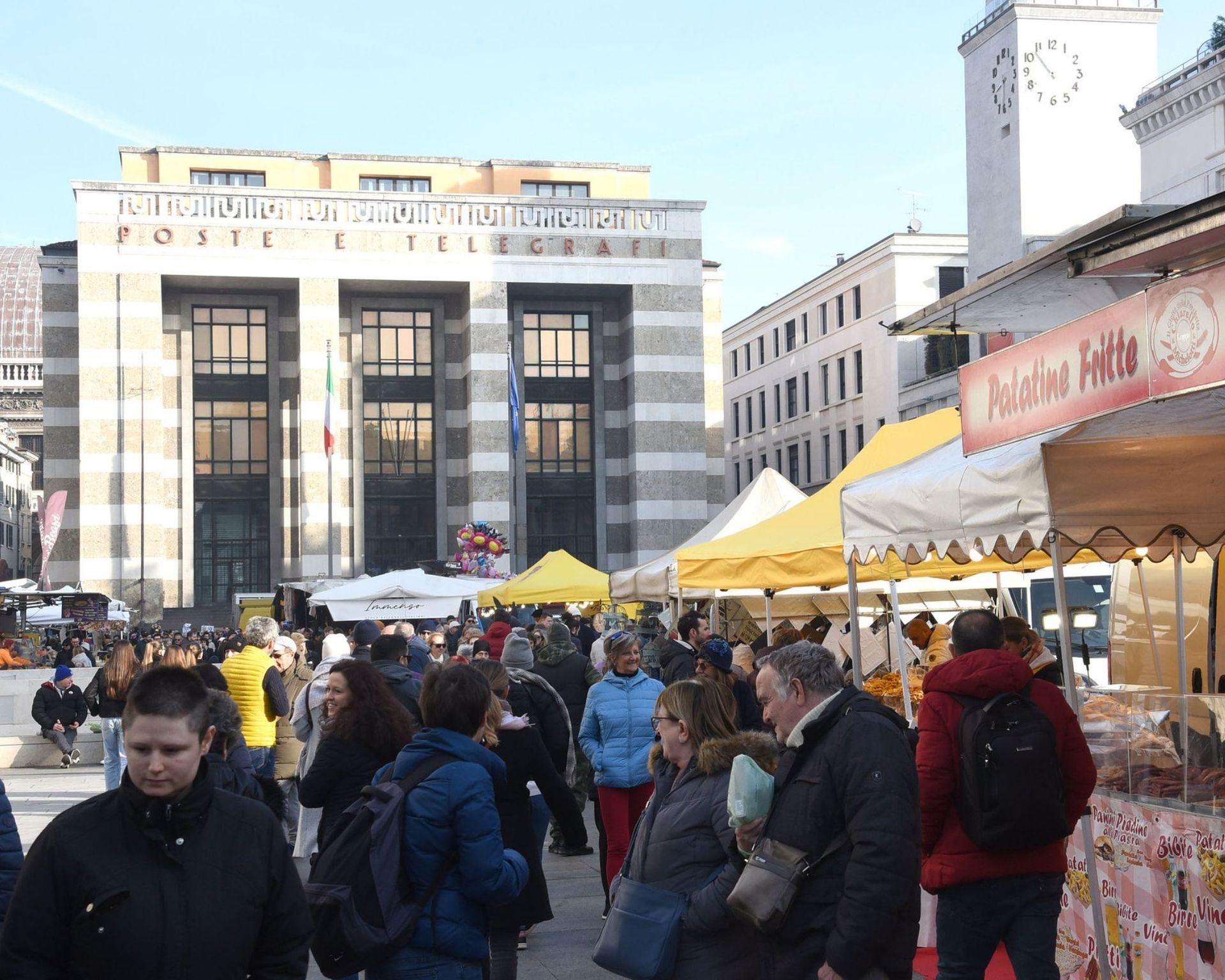
Today Piazza Vittoria is: pedestrianised, served by the metro, home to the central post office, a meeting point for events and appointments such as the antiques market (every second Sunday of the month), embellished with new paving and a modern fountain on the west side.
Piazza della Vittoria isn’t just a place.
It’s an urban vision etched in history. And, to this day, it still gets the city talking.