Church of San Giuseppe
Church of San GiuseppeVicolo S. Giuseppe, 5, 25122, Brescia (BS)sanfaustinobrescia.org/chiesa-di-san-giuseppe/
The complex of San Giuseppe, or St Joseph, was built in 1519 by the Observant Franciscans thanks to financial compensation from the Venetian Republic after the “Spianata”, or demolition, of 1516. It immediately became a focal point for the religious and cultural life of the city.
Despite the suppressions between the 18th and 19th centuries, the church never closed its doors. And since 1973, part of the convent has housed the Diocesan Museum, which continues to chronicle the connections between art, faith and Brescian identity.
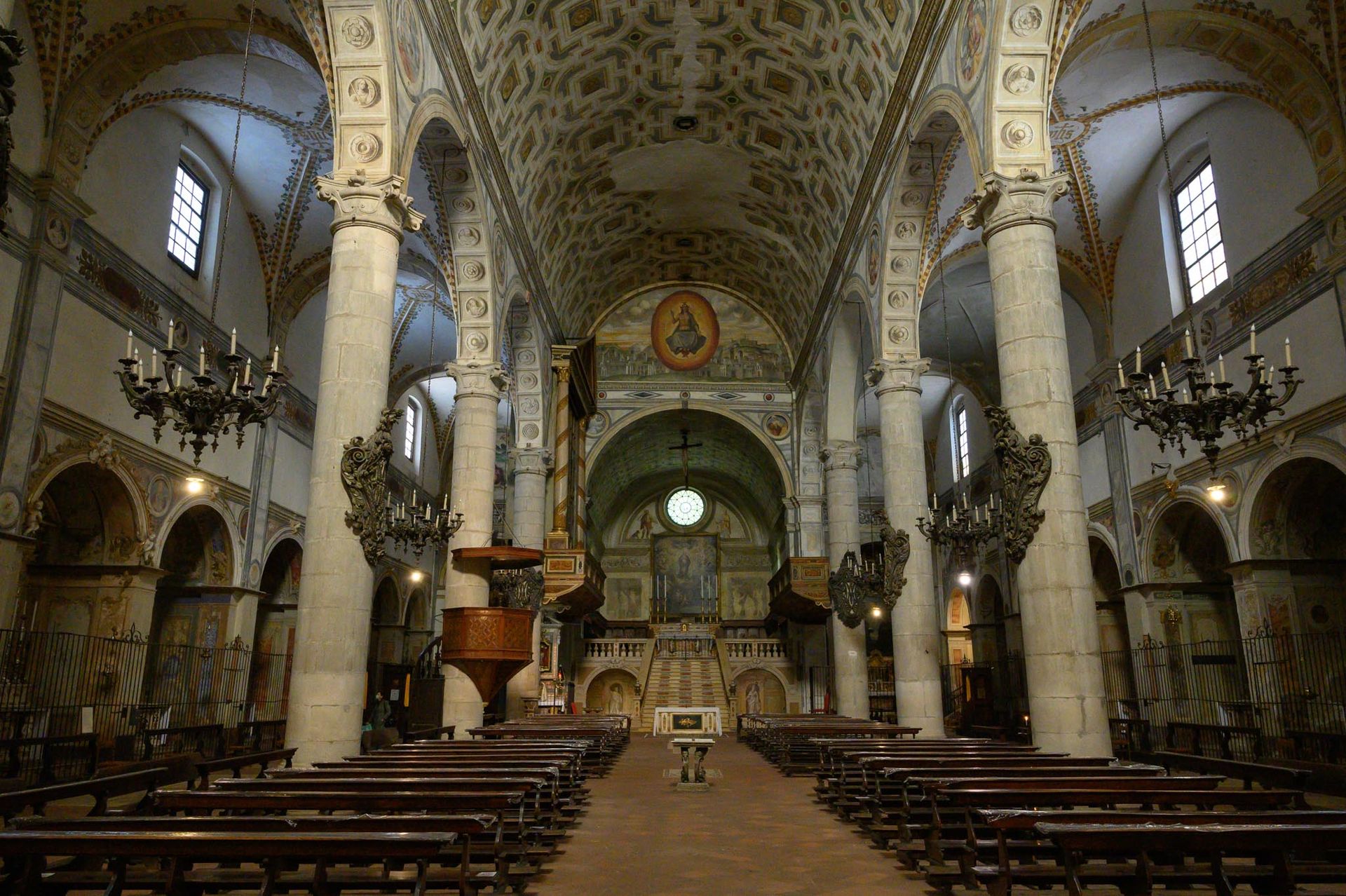
The Renaissance façade with its Gothic pinnacles leads to a simple but solemn interior: three naves, a raised apse and a small crypt. The chapels house masterpieces of 16th- to 18th-century Brescian painting, including Giovanni Antonio Cappello's Via Crucis, which still speaks to the heart.
THE HISTORY
In 1515, the Observant Franciscans arrived to find a run-down area of the old city centre, the Curia dei Fabii: abandoned vegetable gardens, dilapidated houses, even a brothel. But for them it was the right place to start again. Their mission? To redevelop the neighbourhood and restore its dignity.
In 1516, the Venetian Republic ordered the demolition of many buildings around the walls for military reasons: the so-called Spianata. The friars lost their first convent, but obtained compensation. With those funds, they started building San Giuseppe in 1519.
Within a few years the church took shape: in 1521 the roof was completed, between 1531 and 1534 the sacristy and cloister were built, and in 1610 the third cloister was also completed. The complex grew, expanding in size, and in 1757 a library was added.
Then came difficult times: in the late 18th and 19th centuries, many religious communities were dissolved. But San Giuseppe remained open, thanks to the devotion of the people of Brescia. In 1810, the complex passed to the State, but the church lived on. Only in 1896, after a long legal battle, did it officially return to the diocese.
In 1973, it was given a new lease of life: the third cloister became the seat of the Diocesan Museum, which still preserves and narrates the history and art of the city.
San Giuseppe isn’t just a building: it’s a concrete example of how beauty and faith never stop in Brescia. They transform.
THE ARCHITECTURE
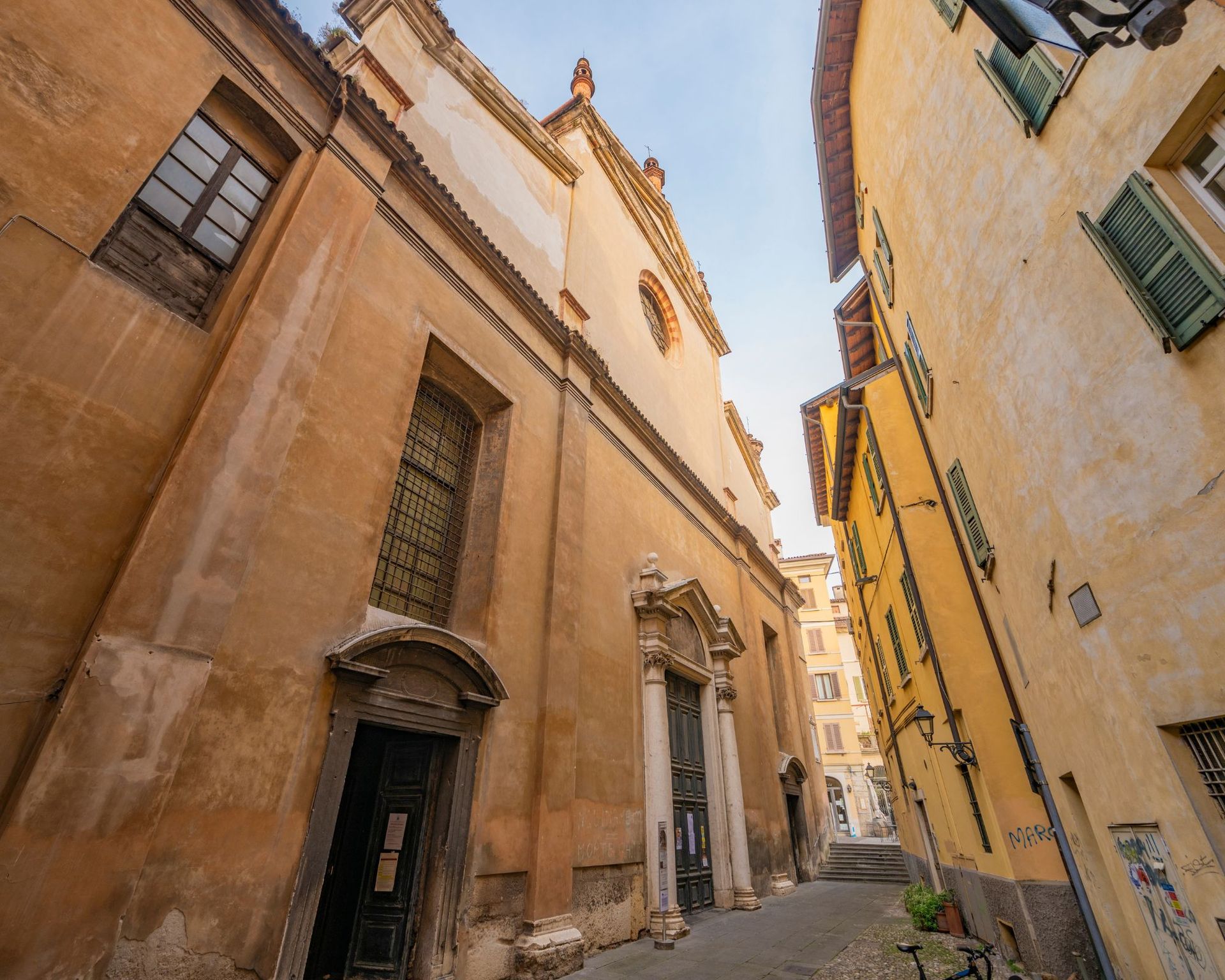
The façade of San Giuseppe is discreet, almost hidden among the neighbourhood's medieval buildings. But a glance from Piazza della Loggia is enough to note the Gothic-style terracotta pinnacles and the Renaissance portal by Stefano Lamberti. It’s a rare example of 16th century architecture that remains intact in the heart of the city.
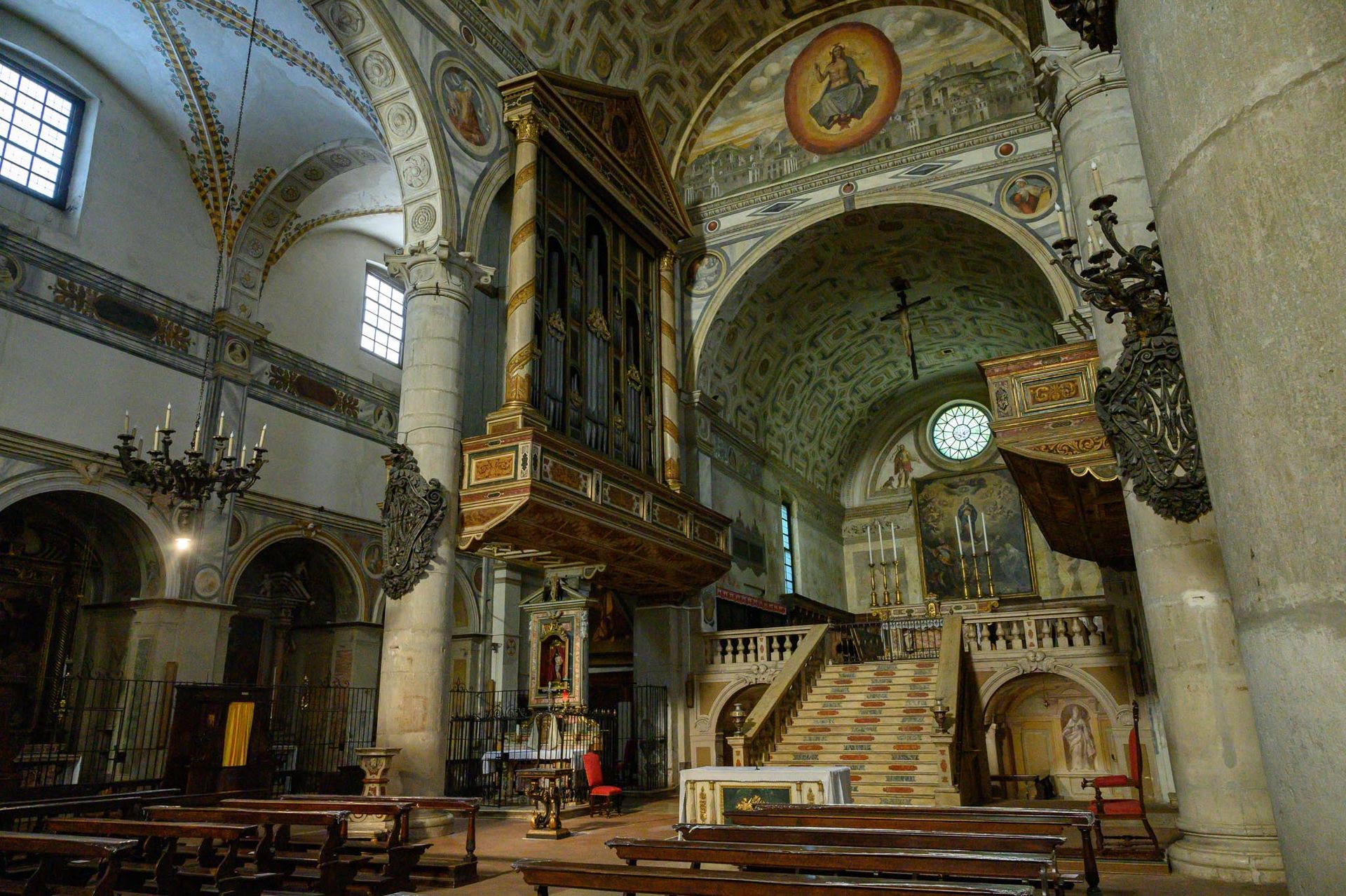
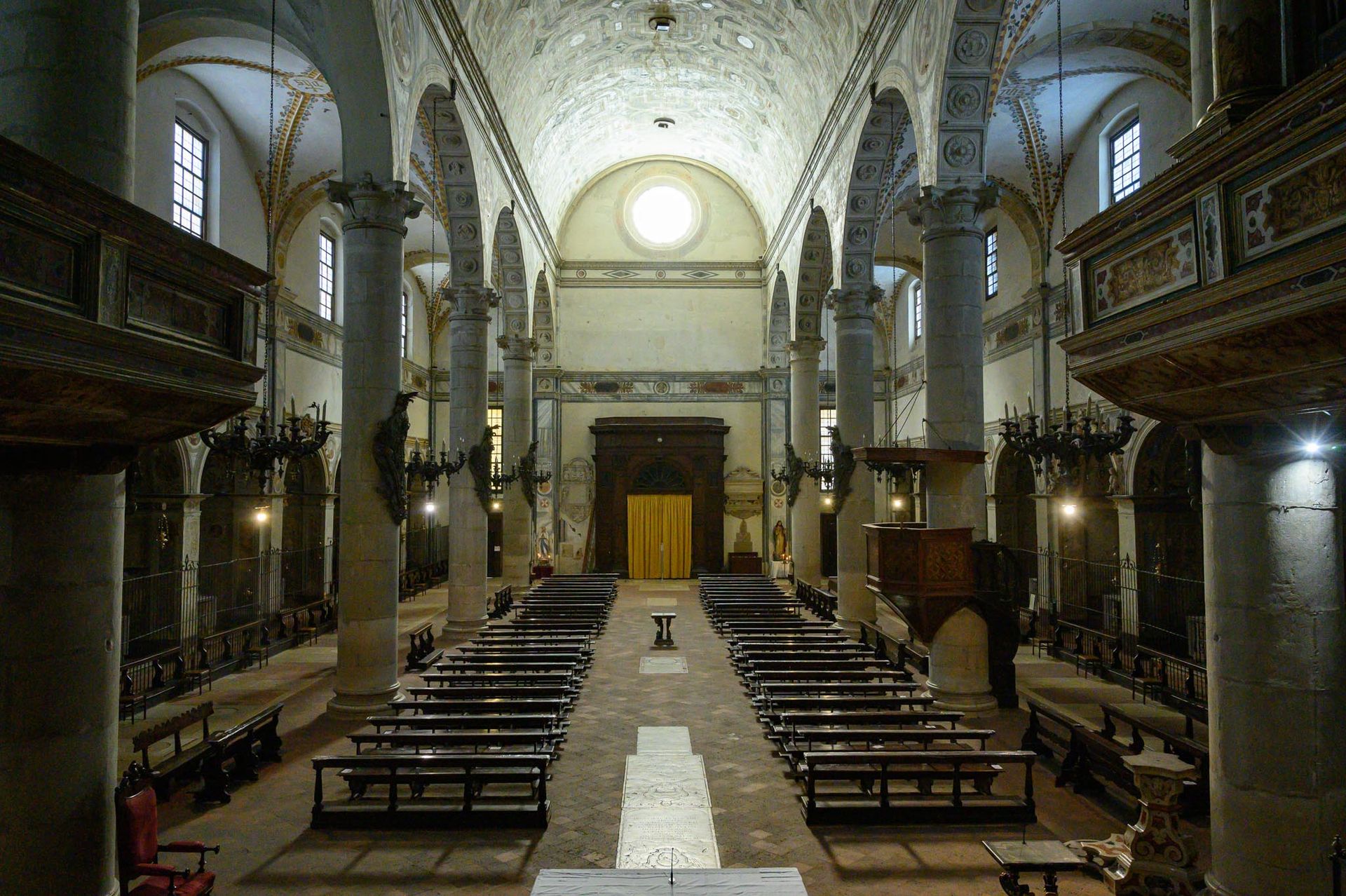
The church interior is simple but striking: three naves, no transept. The high, bright central nave is surmounted by a barrel vault with geometric decorations. The narrower side naves retain their Gothic cross vaults, colourful and lavish in detail. The mix of styles conveys the character of the Brescian craftsmen: rooted in tradition, but open to change.
The chapels along the naves feature altars, tombs and works of art. At the far end, the raised apse rests on a shorter than expected crypt. Not by chance, but by necessity: during construction, a private alleyway prevented the building from being extended. So it was built vertically, with an underground tunnel to leave the passage clear. Today that alley no longer exists, but the solution remains a tangible sign of an architecture that knows how to adapt and endure.
Nessun risultato.