Church of San Francesco d’Assisi
Church of San Francesco d’Assisi Via San Francesco D'Assisi, 1, 25122, Brescia (BS)www.sanfrancescobrescia.it
Since 1254, the heart of Brescia has been home to a church that speaks clearly: sobriety, faith and beauty. The Franciscan friars built it on land donated by the city, and it’s one of the earliest examples of Franciscan architecture in Lombardy.
Over time its appearance has changed, as it’s been enlarged, restored, and stitched back together following war wounds; but its spirit has always remained intact. Inside it holds art and silence. Outside, the old convent with its cloisters is still home to the Friars Minor Conventual and their postulate for northern Italy.
A place where faith makes no noise. But it leaves its mark.
THE CHURCH
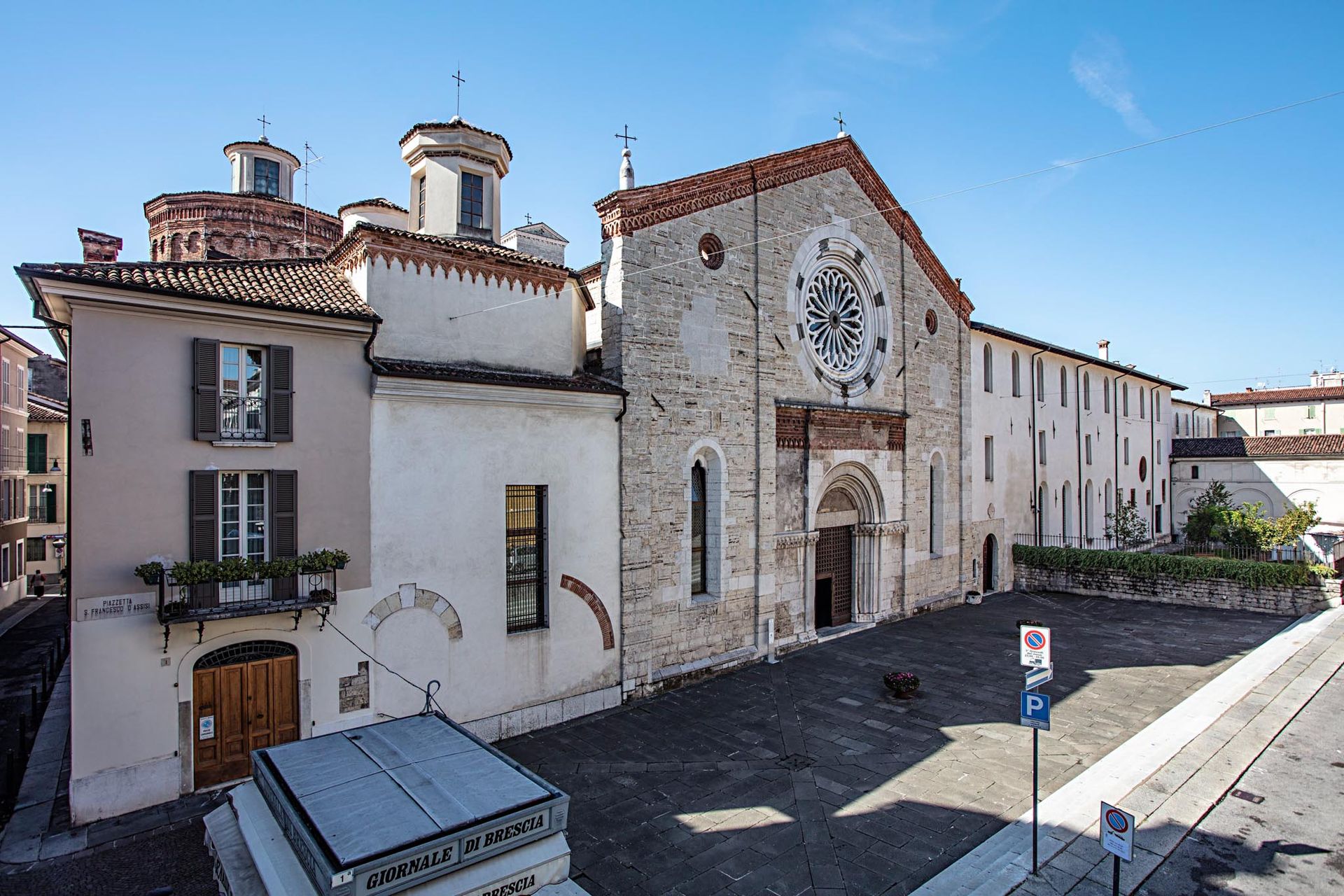
In the heart of the historical centre, between Corso Palestro and Via San Francesco, is a church that’s one of the earliest examples of Franciscan architecture in Lombardy, built in 1254 on land donated by the city to the friars as a sign of gratitude for the peace restored to the city.
Its appearance has changed several times over the centuries: between the 18th and 19th centuries, Vantini redesigned the interior in the Neoclassical style. Then it was damaged, but not destroyed, during the war. Restoration work in the 20th century restored the medieval spirit that had always inhabited it.
Next door, the 14th-century convent with its cloisters continues to be home to the Friars Minor Conventual and the centre of their postulate for northern Italy.
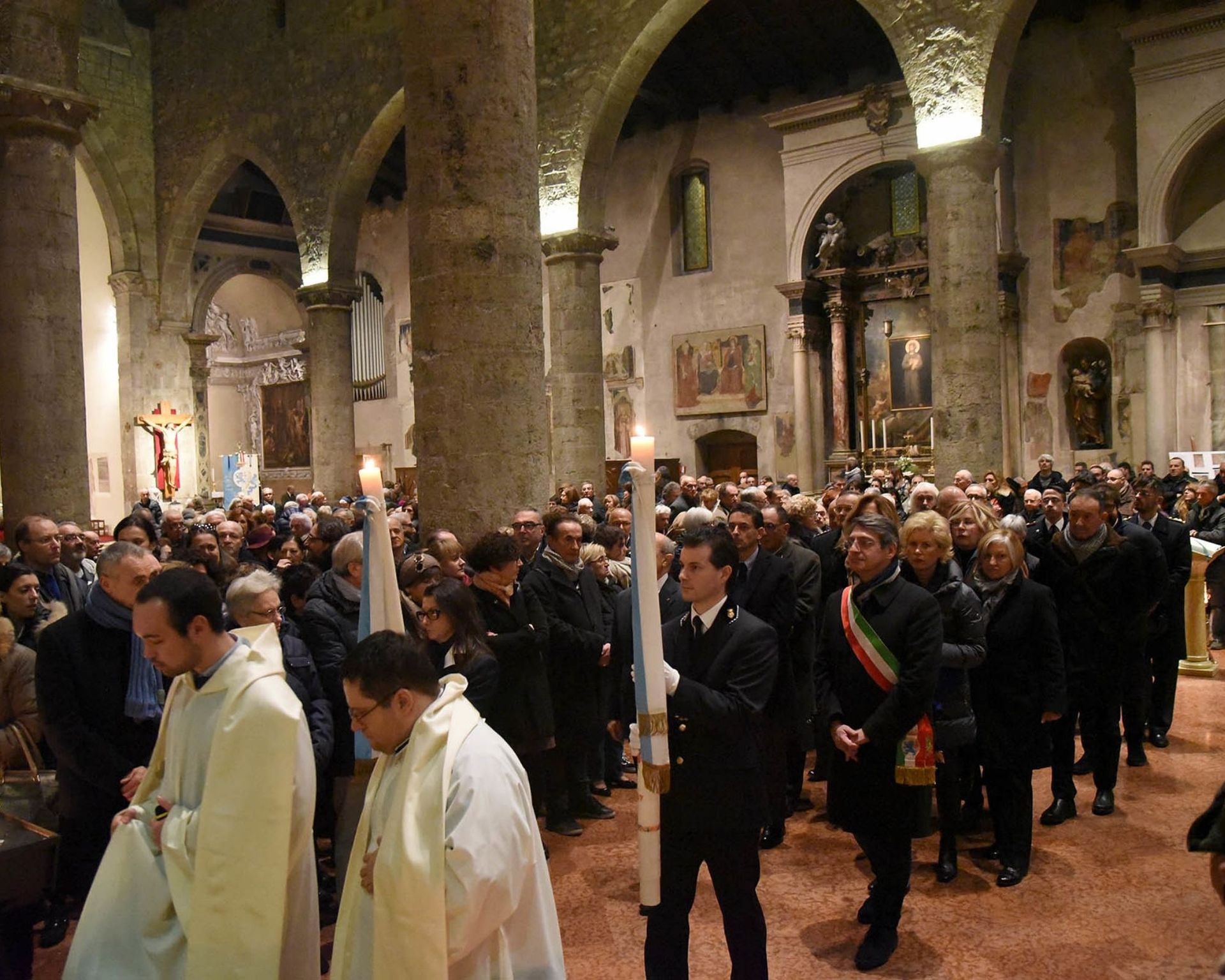
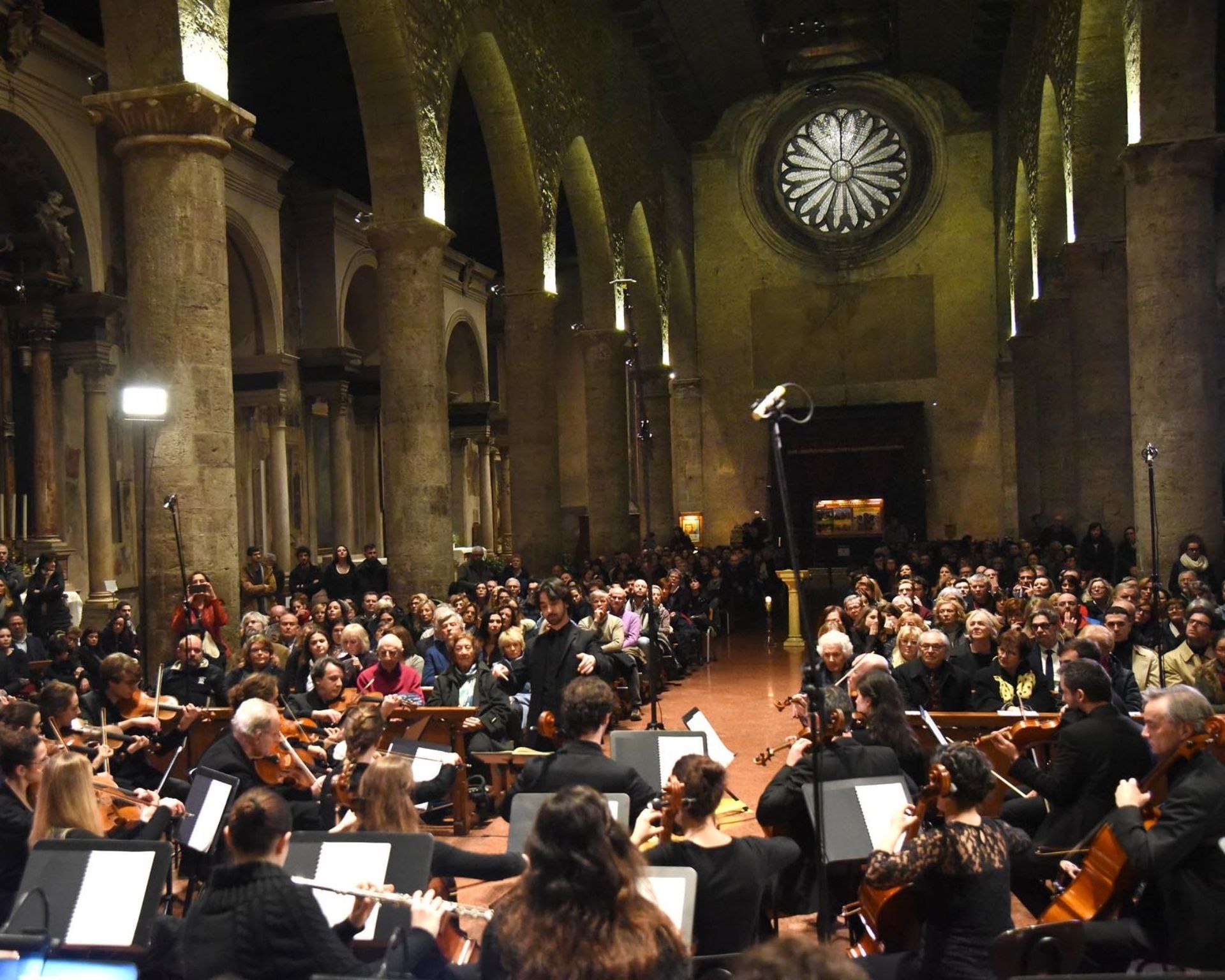
This silent, minimalist place continues to do what it has always done: unite, welcome, protect.

THE FAÇADE
The church has a simple but bold gabled façade in medolo stone, marked by clean lines and terracotta arches. The sculpted portal, crocket capitals and polychrome rose window catch the eye. At the sides, oculi and trilobed single lancet windows recount the transition from Romanesque to Gothic with an audacious touch.
The bell tower, partially rebuilt after the war, completes the profile with elegant double lancet windows and Gothic details that have withstood the test of time.
But the real treasure is next to the church: the cloisters. The larger cloister, created by Guglielmo da Frisone in 1394, is a perfect balance of red marble, Gothic arches and terracotta decoration. It has endured centuries, transformations and even a period as a military bakery, but has kept its identity.
In the more intimate Madonnina cloister we can still admire faded frescoes by Pietro Marone. Two other, more hidden cloisters complete the complex: silent, elegant, witnesses to a history that has never stopped.
THE INTERIOR
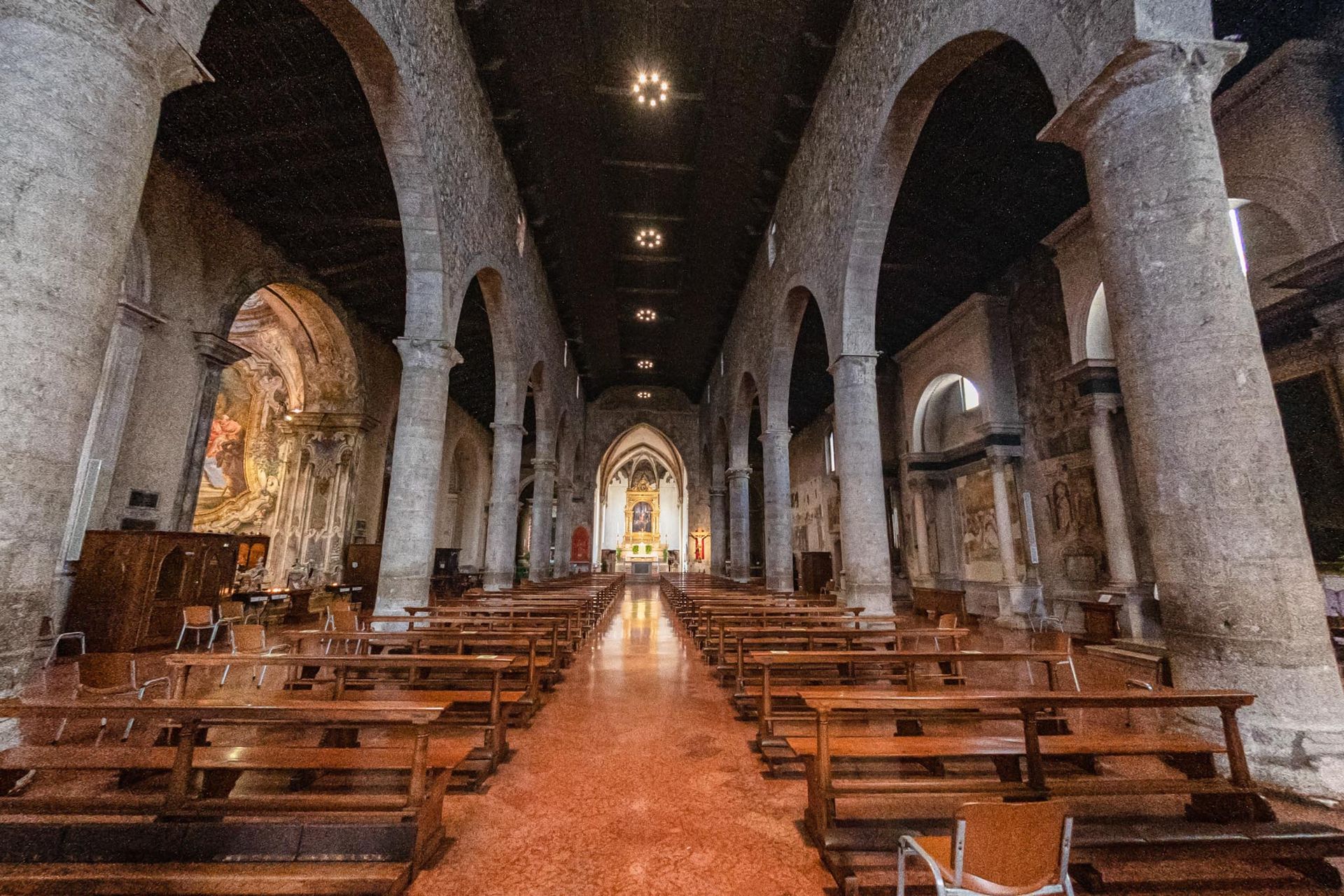
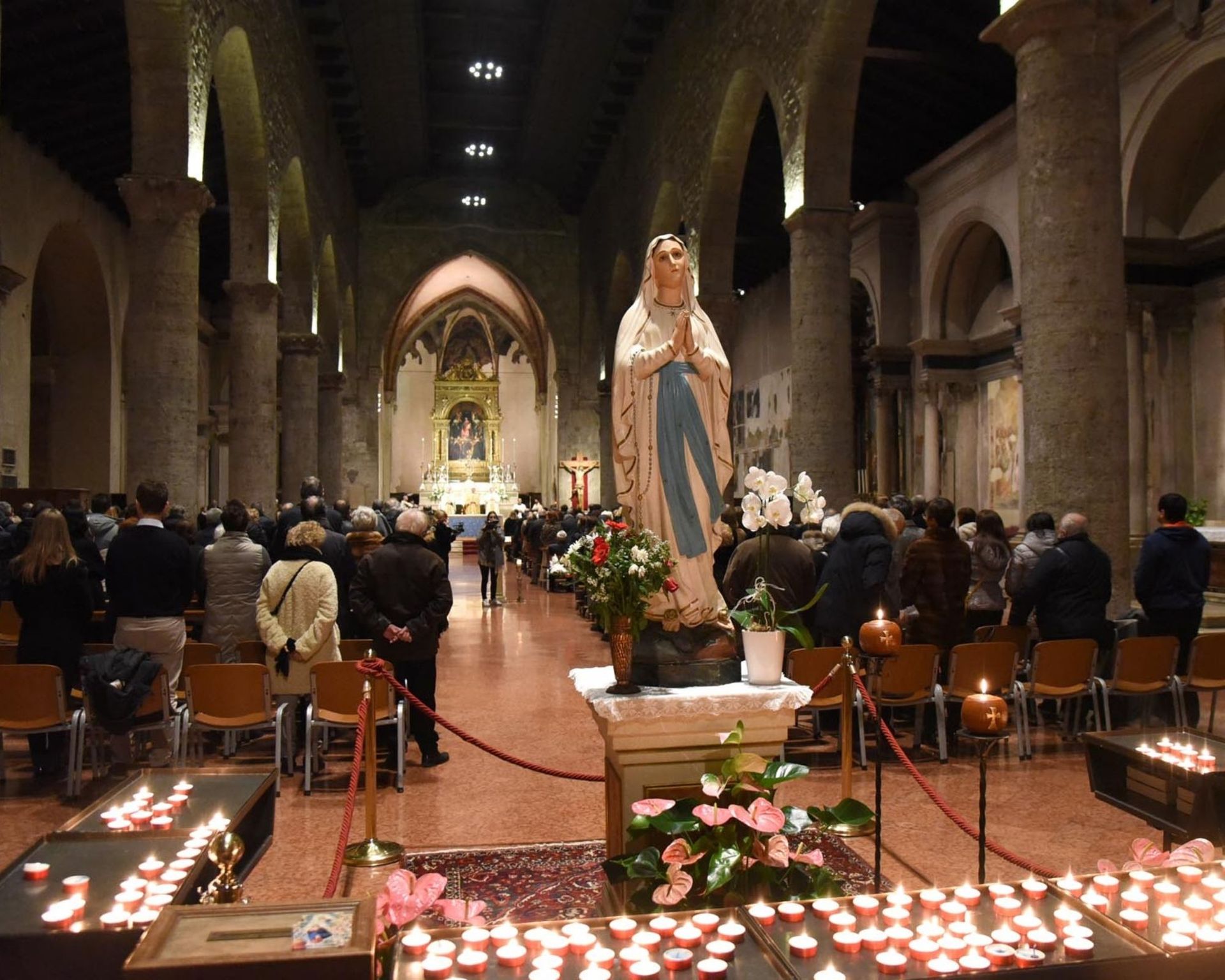
The interior of the church is spacious and harmonious, with a traditional three-nave structure divided by Gothic columns and arches. The central nave has a trefoil ship’s hull ceiling reminiscent of Venetian architecture, while the side naves are surmounted by elegant coffers. Everything is designed to give a sense of openness and continuity: it almost looks like one vast, open space.
The presbytery opens onto the choir with ribbed vaults, flanked by side chapels. The walls, frescoed since the 13th century, have changed appearance several times, following the history of the church and those who have passed through it