Plaza Vittoria
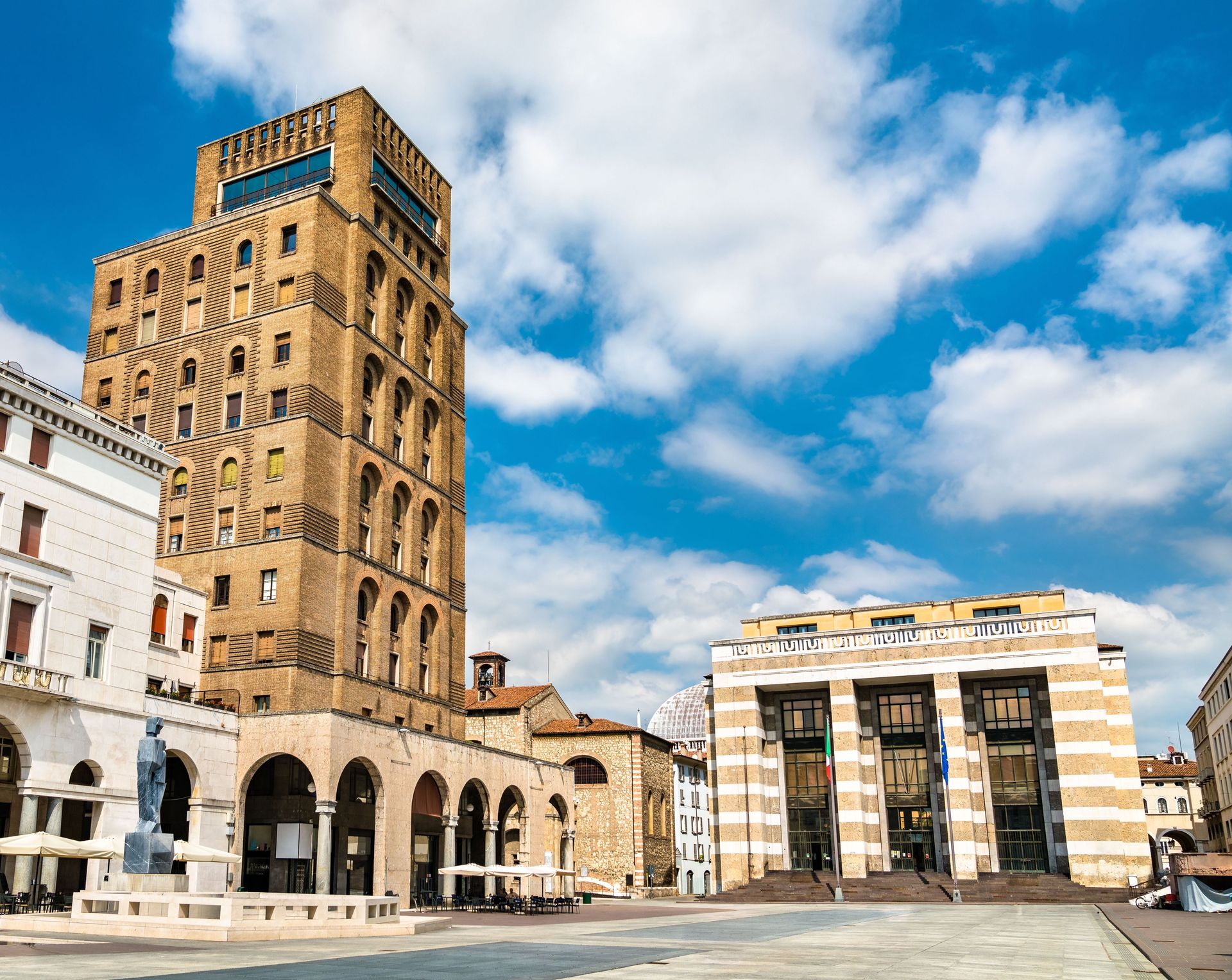
Plaza VittoriaPiazza della Vittoria, 25122, Brescia (BS)
Entre geometrías monumentales y memoria esculpida en piedra, Plaza Vittoria es uno de los espacios urbanos más icónicos de Brescia.
LA HISTORIA
Realizada entre 1927 y 1932 según el proyecto del arquitecto Marcello Piacentini, es considerada uno de los máximos ejemplos de arquitectura racionalista en Italia.
Aquí se encontraba el barrio de las Pescaderías, un laberinto de callejones, edificios medievales de hasta 25 metros de altura, mercado de pescado, carne y granos. Pero también era una zona degradada. En 1927, con el apoyo de Augusto Turati y del régimen fascista, se decide la demolición del área. Piacentini diseña un plan urbanístico moderno y ambicioso. En 1932, la nueva plaza es una realidad.
Las demoliciones borran edificios históricos, el matadero del siglo XV, la capilla de San Ambrosio e incluso la curia ducal longobarda. Pero sacan a la luz restos arqueológicos fundamentales: muros tardo-antiguos, una torre medieval, un palacio longobardo. Otros hallazgos emergerán en 2008, durante las obras del metro.

Photo credit: Rapuzzi

Photo credit: Rapuzzi
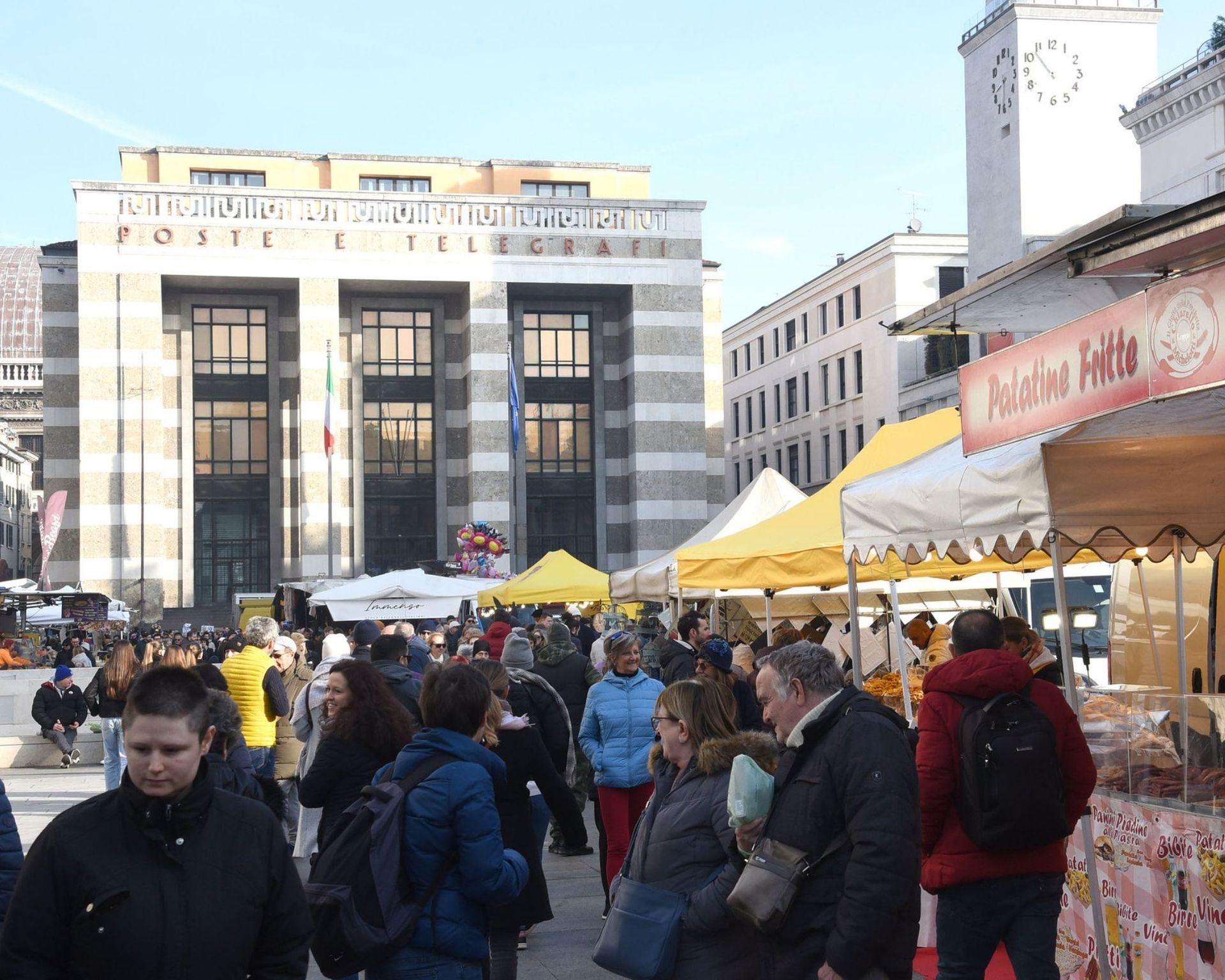
Ph Christian Penocchio
DESCRIPTION
Piazza Vittoria is an L-shaped space with extensive use of white marble, geometric lines and nods to the Roman world. The main buildings are true urban icons:
the INA Tower (57.25 m), Italy's first skyscraper, the Post Office Building, the Torre della Rivoluzione, or Revolution Tower, and other buildings that blend rationalism and classicism.
Originally, in the centre of the square stood the 'Bigio', Arturo Dazzi's monumental statue, which was removed after the war. Next to it was a high relief by Arturo Martini, now also lost. Instead, the arengario, essentially a stone pulpit located below the Revolution Tower and decorated with bas-reliefs telling the history of Brescia, still stands.
Today Piazza Vittoria is: pedestrianised, served by the metro, home to the central post office, a meeting point for events and appointments such as the antiques market (every second Sunday of the month), embellished with new paving and a modern fountain on the west side.
Piazza della Vittoria isn’t just a place.
It’s an urban vision etched in history. And, to this day, it still gets the city talking.